10 hr 30 min
Nikko Day Tour: Toshogu Shrine, Kegon Falls & Lake Chuzenji from Tokyo
- Expert local guide
- Small group
- Skip-the-line access
- Free cancellation
Nikko Winter Tour — Toshogu Shrine Reserved Entry
Cedar shadows on frozen stone, gold leaf under snow.
Compare fares, pick the fit — all bookings are mobile-voucher and eligible for free cancellation where shown.
10 hr 30 min
10 hr 30 min
10 hr
A nikko winter tour starts with one decision: shrine-only, museum-only, or the combo pass covering both, since each unlocks a different slice of Toshogu's UNESCO grounds.
| Shrine Ticket Entry only |
Top pick Combo Ticket Shrine + Museum |
Museum Ticket Museum only | |
|---|---|---|---|
| What's included | Shrine grounds, Yomeimon Gate, Honjido Hall | Shrine grounds plus Toshogu Museum | Toshogu Museum artifacts only |
| Access to Crying Dragon hall | — | ||
| Access to Treasure Hall artifacts | — | ||
| Price | 1,600 JPY | 2,400 JPY | 1,000 JPY |
| Best for | First-timers wanting core shrine sights | Visitors wanting shrine and Tokugawa relics together | Museum-focused or repeat visitors |
| See tickets & prices |
Verdict: Most first-timers on a nikko winter tour do fine with the Combo Ticket, since it adds the Treasure Hall's Tokugawa artifacts to the shrine and Crying Dragon hall without a second ticket line later; budget-focused visitors can skip straight to the 1,600 JPY shrine-only ticket.
Worth it for winter-hardy first-timers
A nikko winter tour of Toshogu Shrine costs 1,600 JPY for adult admission to the main grounds — modest for what the cold season delivers. The value math is straightforward: fewer tour buses, room to breathe on the approach, and snow sitting against lacquered gold and carved cedar that summer crowds bury. That contrast alone justifies the fee for anyone drawn to Japanese UNESCO heritage and Edo-era craftsmanship. The catch is effort. You climb 207 steps, often icy, in genuine cold, so a Nikko Toshogu tour pays off best for travelers who don't mind bundling up and moving slowly. If you want the ornate carvings and the Yomeimon Gate without shoulder-to-shoulder queues, this skip-the-line shrine experience earns its price. Casual visitors chasing warm-weather comfort or a quick photo stop will feel the trek outweighs the reward. Serious sightseers get strong return on 1,600 JPY.
Bottom line: For prepared cold-weather sightseers, this nikko winter tour tickets purchase returns far more than its 1,600 JPY price.
Hand-picked experiences loved by thousands of travelers
Full day (approximately 12 hours including travel)
Free Cancellation
Explore Nikko's sacred shrines, mountain lakes, and thundering waterfalls on a private guided day trip from Tokyo.
10 hours (including travel time from Tokyo)
Free Cancellation
Explore UNESCO shrines, thundering waterfalls & crater lakes on a private 10-hour journey from Tokyo.
11 hours
Free Cancellation
Chase Japan's fiery fall foliage on an 11-hour guided journey through Nikko's sacred shrines and mountain scenery.
Enter via the main gate and orient at the courtyard before the Sacred Stable.
View the eight carved panels including the famous Three Wise Monkeys scene.
Study the more than 500 carvings on Japan's most ornate shrine gate.
Hear the acoustic echo beneath the painted ceiling dragon.
Ascend the 207 stone steps past the Sleeping Cat carving to Ieyasu's tomb.
Descend and exit through the main approach toward Rinno-ji or the museum.
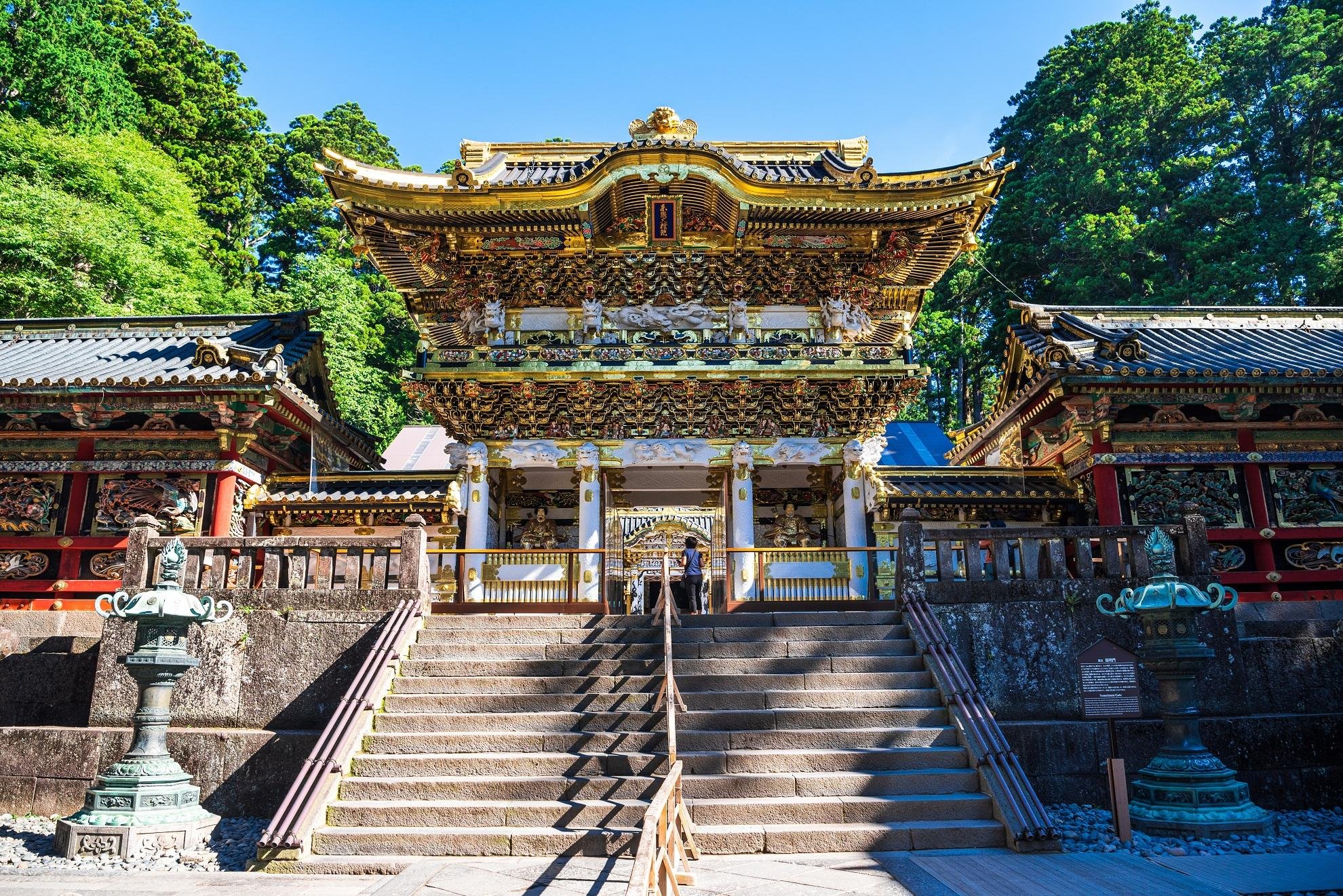
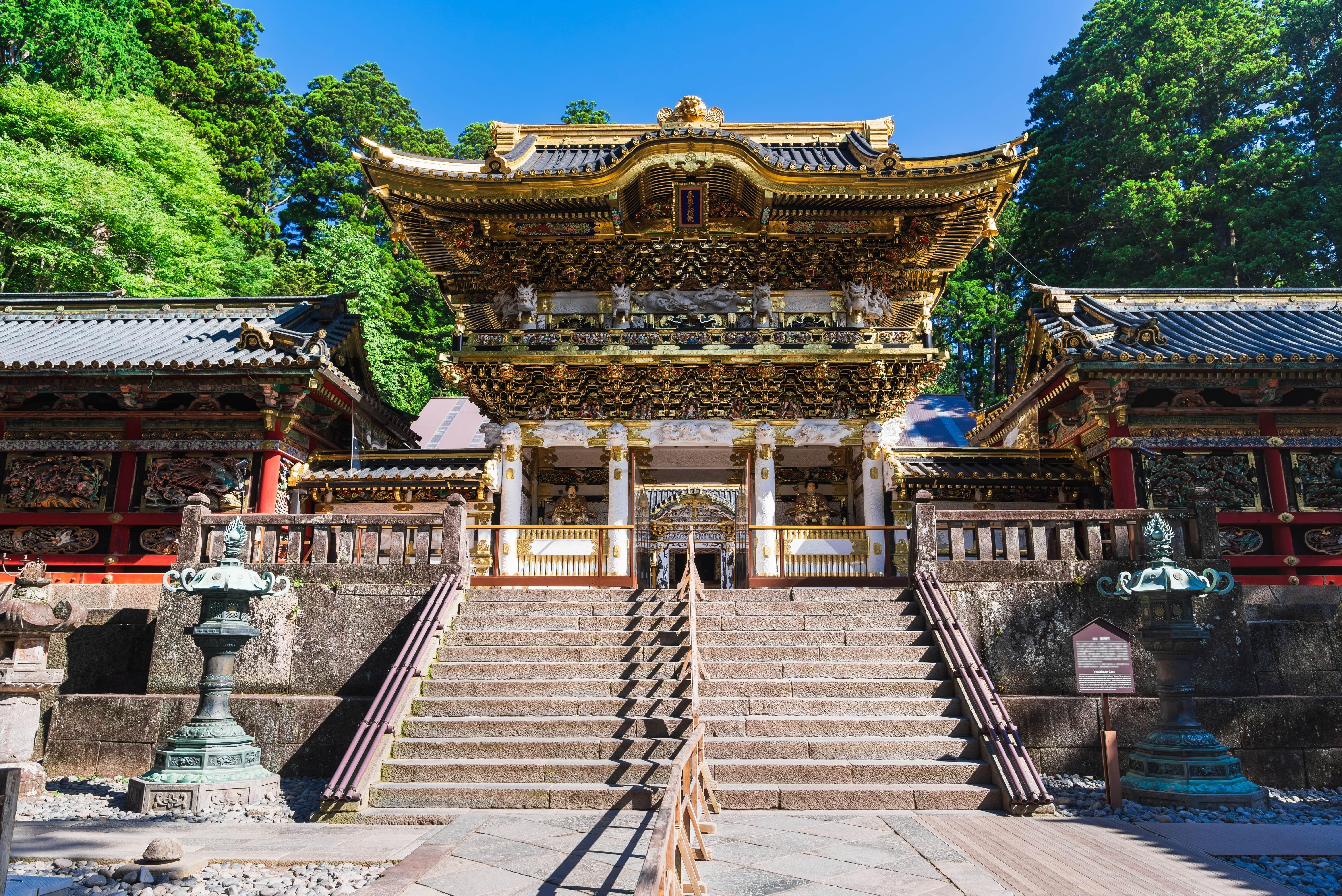
Known as the Sunset Gate, this National Treasure gate carries more than 500 carvings of dragons, sages, and children across roughly 11 meters of height. One pillar was deliberately carved upside down, a design flaw left intentionally to avoid provoking the jealousy of the gods.
Carved by the legendary craftsman Hidari Jingoro, this sculpture measures under 20 centimeters yet marks the entrance to Ieyasu's inner mausoleum. On the reverse side of the same beam, sparrows are carved undisturbed, symbolizing an era of peace secure enough for predator and prey to coexist.
This unpainted wooden stable holds eight carved panels depicting the human life cycle, though only the third panel shows the world-famous 'see no evil, hear no evil, speak no evil' trio. The stable's plain wood was a deliberate contrast to the gilded structures elsewhere in the complex.
Inside this hall under Rinno-ji's jurisdiction, a dragon spans 34 cypress boards painted across the ceiling. Clapping two wooden blocks beneath its head produces a ringing echo caused by the ceiling's curvature, a acoustic effect priests still demonstrate for visitors.
Reached by climbing 207 stone steps through a forest of towering cedars, this comparatively simple tomb holds the remains of Tokugawa Ieyasu, founder of the shogunate that ruled Japan for over 250 years. Its restraint contrasts deliberately with the ornate halls below.
A smaller, intricately carved gate just beyond Yomeimon leading to the Main Shrine, where portable mikoshi shrines used in Toshogu's spring and autumn festivals are displayed. Its detailed latticework is often overshadowed by its larger neighbor despite comparable craftsmanship.
You arrive between 09:00 and 10:30, before the tour buses reach the approach, and step onto the cedar avenue with your breath showing. The path climbs toward the shrine, and you count the stone lanterns half-buried in snow as you go. At the ticket gate you present your voucher, pass through the first torii, and the vermilion structures open ahead of you. You pause beneath the Yomeimon Gate and let your eye travel over the carved sages and dragons, the paint vivid against the grey sky. You tilt your head back in the Honjido hall to hear the Crying Dragon ring when the clapper strikes. You climb the stone stairs — 207 of them lead up toward Ieyasu's tomb — steadying yourself on the cold rail where meltwater has frozen into the treads. By the time you reach the upper terrace, the early quiet is yours: the gold leaf catching what little sun there is, the cedars towering black and white around you. A well-run nikko winter tour leaves room here to stand still. You retrace your steps down through the Karamon gate, gloves on, camera out, before the mid-morning crowd begins its climb behind you.
All the details about your upcoming adventure in one place
A nikko winter tour brings the snow-dusted cedar avenues, frozen cascades, and lantern-lit shrine grounds of this mountain sanctuary into a single guided day. Guests joining our nikko winter tour tours travel with a local guide who knows how the Kegon Falls and Lake Chuzenji shift under fresh powder. This Nikko sightseeing experience pairs quiet forest trails with warm stops that make the cold season feel welcoming.
The mausoleum of Tokugawa Ieyasu was completed in 1636 by a workforce said to have numbered 15,000 artisans, who covered its structures in some 2.4 million sheets of gold leaf. A nikko winter tour arrives at a version of Toshogu Shrine that summer visitors never see: the vermilion gates rimed with frost, the surrounding cryptomeria cedars — many over 350 years old — holding banks of snow across their branches. The shrine was raised to enshrine Ieyasu, the founder of the Tokugawa shogunate that governed Japan for more than 250 years. His grandson, Iemitsu, ordered the lavish reconstruction that stands today, transforming a modest grave into a complex of more than a dozen buildings. In 1999 the shrines and temples of Nikko were inscribed as a UNESCO World Heritage Site, a designation that recognizes both the architecture and the sacred forest setting around it. Toshogu concentrates an extraordinary density of carving. The Yomeimon Gate alone holds over 500 carved figures — sages, children, dragons, and mythical qilin — so intricate that it earned the nickname Higurashi-mon, the gate one could gaze at until dusk. Nearby, the Sacred Stable carries the three wise monkeys, hear no evil, speak no evil, see no evil, among the most reproduced wood reliefs in the world. Overhead in the Honjido hall, the Crying Dragon painted across the ceiling produces a resonant ring when a wooden clapper is struck beneath its mouth. Winter reorders all of this. The tour buses that clog the approach in autumn thin out, and the descriptive appeal of a Nikko Toshogu shrine tour in the cold months lies in the quiet — snow muffling the gravel paths, meltwater dripping from the eaves of the Karamon gate, the polished black-and-gold lacquer sharpened against a white ground. Guides on the better nikko winter tour tours frame the visit around this contrast, reading the iconography of the carvings against a landscape stripped to its structure. The forest itself belongs to the monument. The avenue of cedars leading toward the shrines was planted over two decades in the 17th century by a retainer named Matsudaira Masatsuna, who could not afford a grander offering; tens of thousands of the trees survive, forming one of the longest tree-lined avenues on earth. Set among them, the mausoleum's lacquered halls read less as isolated buildings than as a single composition — human craft and old-growth forest arranged into one deliberate whole, and never more legibly than under snow, when the ornament and the trees share a single palette.
Winter strips the approach to its structure — snow on the gravel, gold under frost, and the carvings sharper for the quiet.
Warm, layered clothing suits any nikko winter tour since the shrine sits in the mountains and the outdoor precinct stays cold through the season. Sturdy, closed-toe shoes with good tread help on the icy stone steps leading up to the inner mausoleum, and gloves are useful since much of the walk is outdoors between structures.
Bag checks are minimal at the main gate, though staff may glance inside larger bags near the Honden and Yakushido interiors where photography is restricted. Backpacks can be worn on the front when the paths and staircases narrow, particularly on the 207-step climb to the inner shrine, to avoid bumping other visitors or carvings.
Photography is prohibited inside the Honden (main shrine building) and inside the Yakushido Hall during the Crying Dragon acoustic demonstration. Outdoor shooting of Yomeimon Gate, the Sacred Stable, and the Sleeping Cat carving is permitted, but tripods and flash are discouraged in narrow corridor areas due to crowd flow.
Children generally enjoy searching for the carved Sleeping Cat and the Three Wise Monkeys panels along the main route. Strollers are difficult to manage on the stone steps and gravel paths, so a carrier is more practical for younger children.
The approach from the shrine entrance involves gravel paths, stone steps, and the 207-step staircase to Ieyasu's mausoleum, none of which are wheelchair accessible. Visitors with limited mobility can still view Yomeimon Gate, the Sacred Stable, and the main courtyard without climbing to the inner shrine.
Eating and drinking are not permitted within the shrine precinct itself, including near the Honden, Yakushido, and the staircase to the mausoleum. Sealed water bottles are generally tolerated for hydration but should be kept out of sight of carved wooden structures.
Quiet mornings before bus groups
Midweek, lightest foot traffic
Buses begin building by noon
Busiest day, arrive at opening
Family groups from late morning
Hours today
09:00–16:00, last entry 30 min before close
Address
2301 Sannai, Nikko-shi, Tochigi 321-1431, Japan
Access
207 stone steps to the inner mausoleum, uneven in winter
Best arrival
09:00–10:30 to beat tour buses and icy path crowds
Bag policy
Small bags fine, no lockers at shrine gate
Entrance fee
1,600 JPY adult admission to main grounds
Public transport · About 2 hours from Tokyo · Roughly 2,000–3,000 JPY one-way
Take the Tobu Limited Express from Tobu Asakusa Station to Tobu-Nikko Station, then a World Heritage Tour bus to the Omotesando stop about 13 minutes away.
Car · About 2.5 hours from Tokyo · Parking typically 500–1,000 JPY
Drive via the Nikko-Utsunomiya Doad from central Tokyo, with paid parking available near the shrine precinct.
Walk · About 30 minutes · Free
From Tobu-Nikko or JR Nikko Station, walk uphill along the main approach road toward the shrine complex.
Taxi · About 10 minutes · Approx. 1,500–2,000 JPY
Taxis wait outside both Tobu-Nikko and JR Nikko stations for a short ride to the shrine entrance.
Same-day cancellation of a booked nikko winter tour is generally not refundable once the 1,600 JPY conservation fee has been paid at the gate. Pre-booked combination tickets can usually be cancelled or rescheduled up to 24 hours before the visit, though on-site cash admission has no refund window at all.
Weather · crowds · average price — dots go green to amber to red as each metric rises.
December through February brings the coldest temperatures, often near freezing, with occasional snow on the stone steps and cedar-lined paths, making an early nikko winter tour the quietest option of the year.
March through May sees rising crowds as cherry blossoms bloom around Nikko, with the Toshogu Shrine spring festival held in mid-May drawing larger groups.
June through August is humid and warm, with midday tour buses peaking; mornings before 10:30 remain the most comfortable window.
Late October through November brings peak crowds for fall foliage around the shrine and nearby Lake Chuzenji, so weekday visits are notably calmer.
Reaching the gate for the 09:00 opening lets visitors clear the courtyard before the first tour buses arrive, especially valuable on any winter tour when icy steps slow foot traffic.
The 207-step ascent to the mausoleum can ice over after snow or overnight frost, so shoes with real tread matter more here than at flat city sites.
Ticket counters at the shrine accept cash only, so having exact change for the 1,600 JPY entrance fee speeds up the queue.
The Nemuri-neko carving sits about three meters above the corridor and is easy to walk past without noticing.
Since Rinno-ji Temple and Futarasan Shrine share the same UNESCO listing, combining all three in one nikko winter tour saves a return trip.
Between the courtyard, Yomeimon Gate, Yakushido Hall, and the climb to the inner shrine, a thorough visit rarely finishes in under an hour and a half.
Hours and special ceremonies can shift around festival dates, so confirming details on toshogu.jp avoids surprises.
Near 2301 Sannai, Nikko-shi, Tochigi 321-1431
World Heritage Tour bus drop-off, 13 minutes from Nikko Station
Get directionsTobu Nikko Station, Tochigi
Ticket voucher exchange point before heading to the shrine
Get directionsTokugawa Ieyasu died in April 1617, having unified Japan after the Battle of Sekigahara in 1600. His remains were first interred at Kunozan, then moved to Nikko in 1617 and enshrined under the posthumous title Tosho Daigongen. The original shrine was modest. What a nikko winter tour reveals today is not that first structure but a later act of dynastic ambition. His grandson, Tokugawa Iemitsu, the third shogun, ordered a full reconstruction in 1636. That rebuild transformed the site. Iemitsu committed vast resources, and the project drew roughly 15,000 craftsmen who worked for over a year. The result was the 55-building complex of Toshogu that stands now. Master artisans layered lacquer, gold leaf, and more than 5,000 carvings across the grounds. The Yomeimon gate alone carries some 500 sculptures. The three wise monkeys and the sleeping cat by the carver Hidari Jingoro belong to this campaign. The Nikko landmarks that visitors climb toward, up the well-known flight of steps, were designed to glorify a deified ruler. Controversy shadowed the shrine's opulence. Later reformers viewed the gilded excess as emblematic of Tokugawa extravagance, and the Meiji separation of Shinto and Buddhism in 1868 forced a painful division of the once-blended complex. Many winter Nikko Toshogu tour guests overlook how close the grounds came to neglect during that upheaval. Restoration campaigns across the twentieth century, including the long Heisei-era conservation of the Yomeimon completed in 2017, preserved the surfaces seen today. In December 1999, UNESCO inscribed the Shrines and Temples of Nikko as a World Heritage Site, recognizing 103 structures. That listing anchored the modern era of nikko winter tour tours and secured funding for ongoing conservation. Skip-the-line Toshogu Shrine access and nikko winter tour tickets now channel visitors through a monument whose form was fixed in 1636. Those buying a nikko winter tour tour ticket walk the same cedar-lined approach laid out for Ieyasu. The lacquer, the carvings, and the UNESCO heritage frame endure across four centuries.
Ieyasu is enshrined at Nikko under the title Tosho Daigongen after his death that spring.
Iemitsu orders the grand reconstruction that produces the 55-building complex seen today.
Roughly 15,000 craftsmen apply lacquer, gold leaf, and over 5,000 carvings including the Yomeimon.
The Meiji separation of Shinto and Buddhism divides the once-blended shrine and temple grounds.
The Heisei conservation of the Yomeimon gate is completed after years of restoration.
UNESCO inscribes the Shrines and Temples of Nikko, covering 103 structures, as a World Heritage Site.
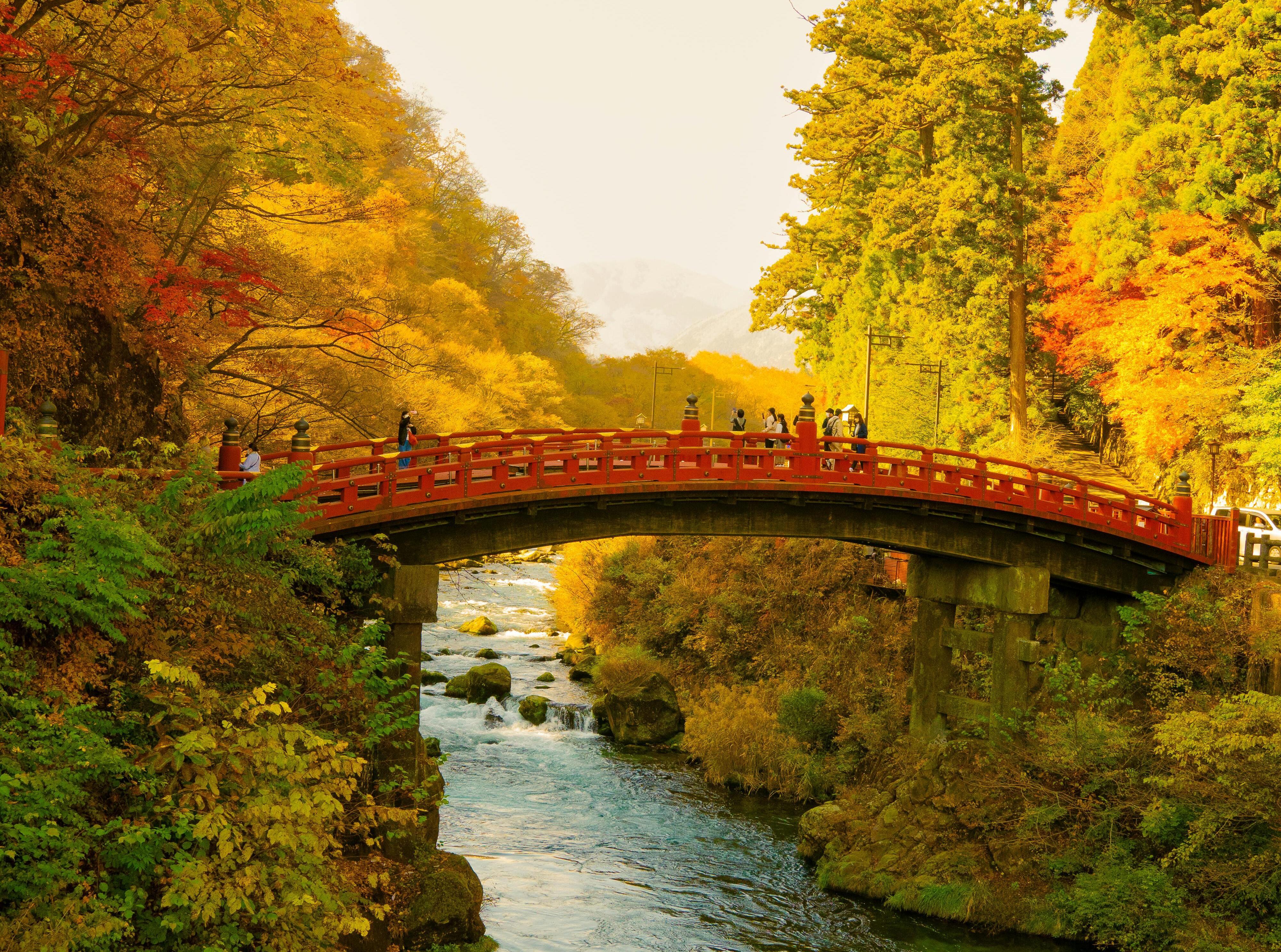
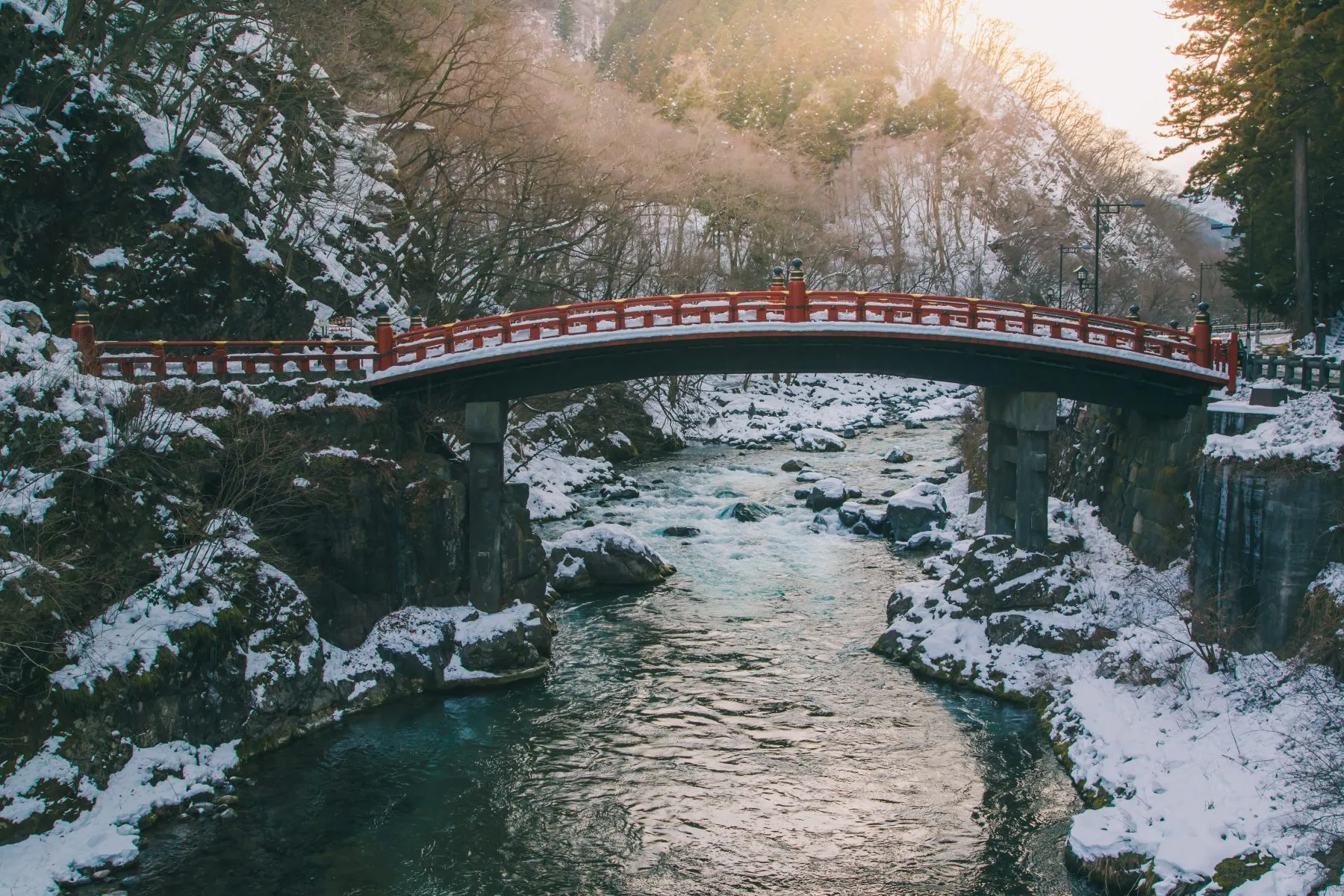
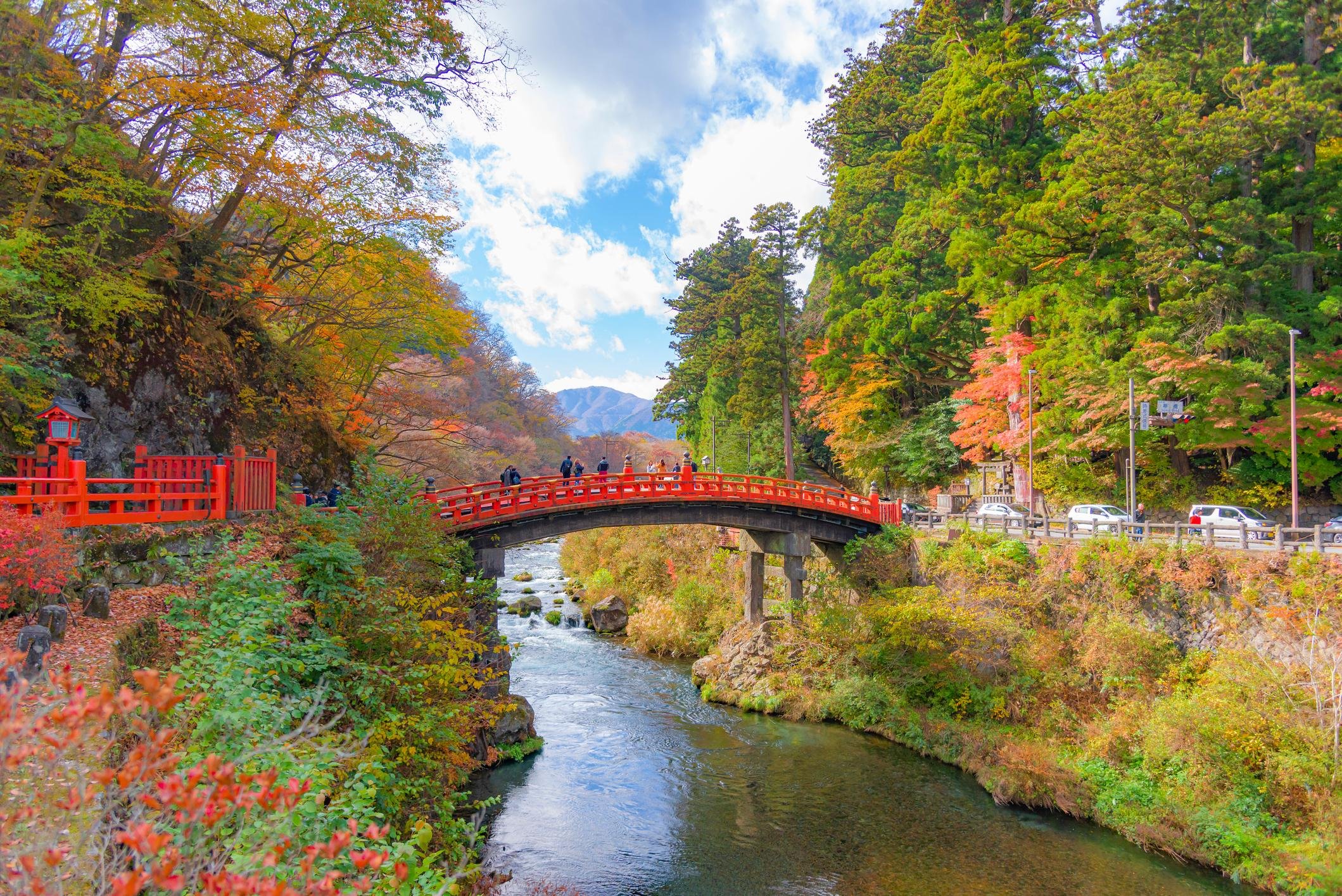
The vermilion arch spans the Daiya River against snow-covered banks; stand on the opposite-bank sidewalk near the crossing point to frame the bridge, river, and torii gate together without paying to cross. Photographers on a nikko winter tour often stop here first before heading uphill to the shrine complex.
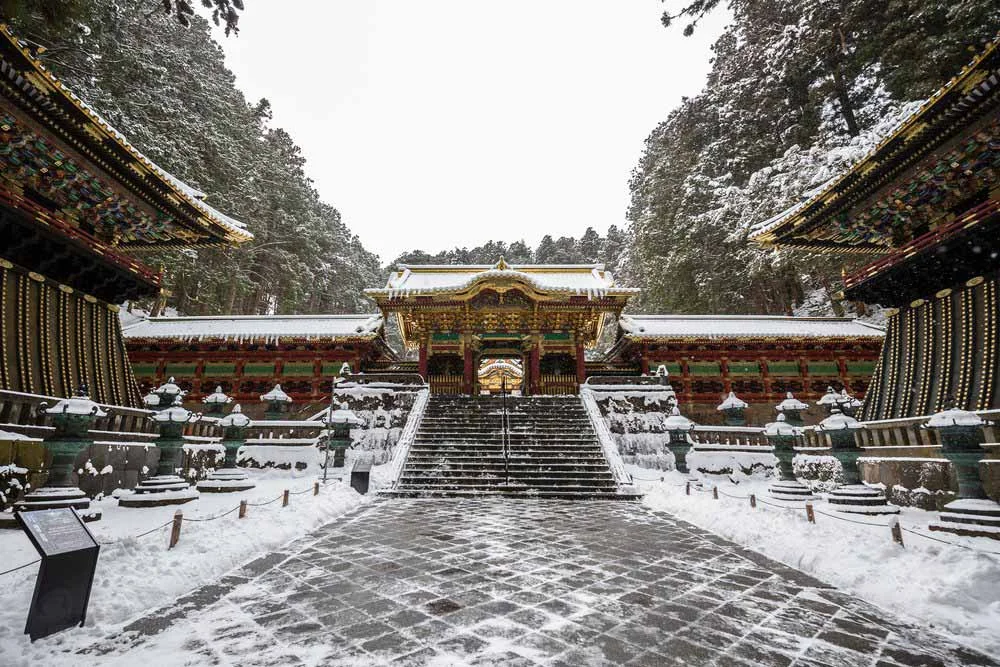
The gilded carvings and white pillars of Yomeimon Gate stand out sharply against a snow-dusted courtyard; shoot straight-on from the stone terrace at the top of the entrance stairs for full symmetry. Interior halls beyond the gate restrict photography, so this exterior angle is the primary composition.
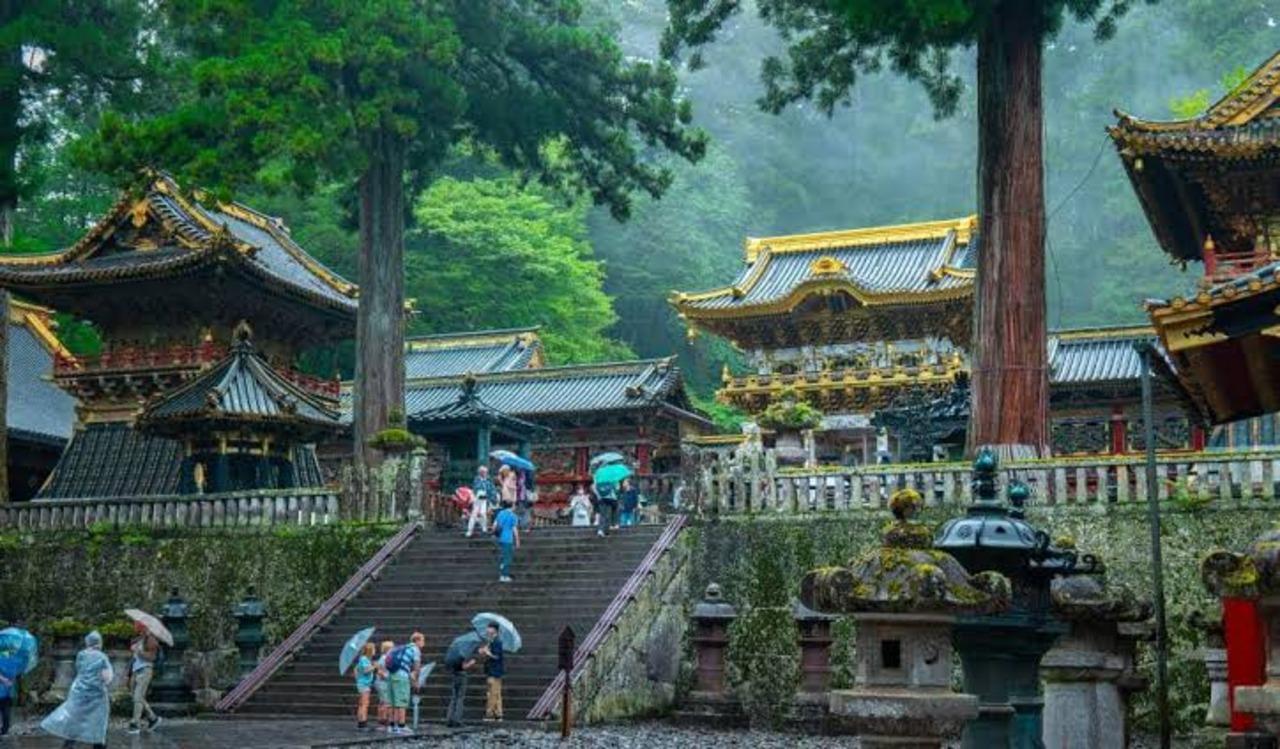
The vermilion pagoda rises above the approach path near the first torii, its tiered eaves capped in snow against dark cedar trunks. Stand back along the stone path for a vertical composition that includes the surrounding cedar avenue.
This small, famous nemuri-neko carving sits above a low gate on the passage toward Ieyasu's tomb; visitors queue briefly for a close frame of the weathered wood panel, often dusted with snow in the surrounding eaves. It is a quick, single-angle shot rather than a wide scene.
The mossy stone stairway leading toward the shrine buildings turns into a snow-lined corridor of granite and cedar, photographed from the base looking upward. Photography is unrestricted along this open-air stretch, unlike the main hall and Treasure Hall interiors ahead.
A nikko winter tour with children means slower steps, snug layers, and plenty of pauses, since the shrine's stone paths and famous 207-step Okusha climb aren't built for little legs. Kids often find the carvings — the sleeping cat, the three wise monkeys, sacred elephants — more absorbing than the architecture itself.
Paths and steps make most of the grounds stroller-unfriendly, especially once snow or ice settles on stone; a soft carrier works far better for toddlers and infants on this Nikko Toshogu tour.
Kids around 5 and up get the most out of it, since they can climb the 207 steps to Ieyasu's mausoleum themselves and actually spot the carvings; under-3s are easier as a carried passenger than a walker.
Treat the 207-step climb as the last stop of the visit, not the first, so tired legs only have to go downhill afterward; budget slow, frequent-rest movement rather than a brisk walk-through.
Turn the visit into a scavenger hunt for the three wise monkeys, the sleeping cat, and the imaginary elephants — it keeps kids looking up and moving instead of complaining about the cold.
Public restrooms sit near the entrance area, but there's no dedicated baby-change room on site, so plan around nearby central Nikko for that; no food is sold inside the shrine grounds.
Stone steps can ice over, so grip-soled boots for kids matter more than a stylish coat; arriving in the 09:00–10:30 window helps you beat both tour buses and the worst of the icy crowding.
There is no dining inside Toshogu Shrine itself, but the approach road toward Shinkyo Bridge is lined with places built exactly for visitors coming off a cold morning walk, making this stretch a reliable stop on any nikko winter tour once the gates open. Bring cash and expect a short wait at the busiest spots around midday.
Hand-cut soba in hot dashi broth, including kakiage soba piled with fried seafood and vegetables. A solid warm-up stop right after the shrine, though it fills fast at lunch.
Multi-course yuba kaiseki lunches showcasing Nikko's signature tofu-skin dish. Best for a sit-down meal if you have time to linger; reservations help on weekends.
The Yuba Hakozen boxed set arranges sashimi-style and simmered yuba dishes for a calm, warming lunch. Table seating for groups; quieter than shops right on the approach.
Yaki udon served sizzling on an iron plate, a good option if noodles rather than yuba sound better. Known for a steady line at peak hours.
A Meiji-era building serving omurice with demi-glace sauce alongside hot coffee and tea. A change of pace from noodle shops, useful for a quieter, heated sit-down break.
Real experiences from real travelers
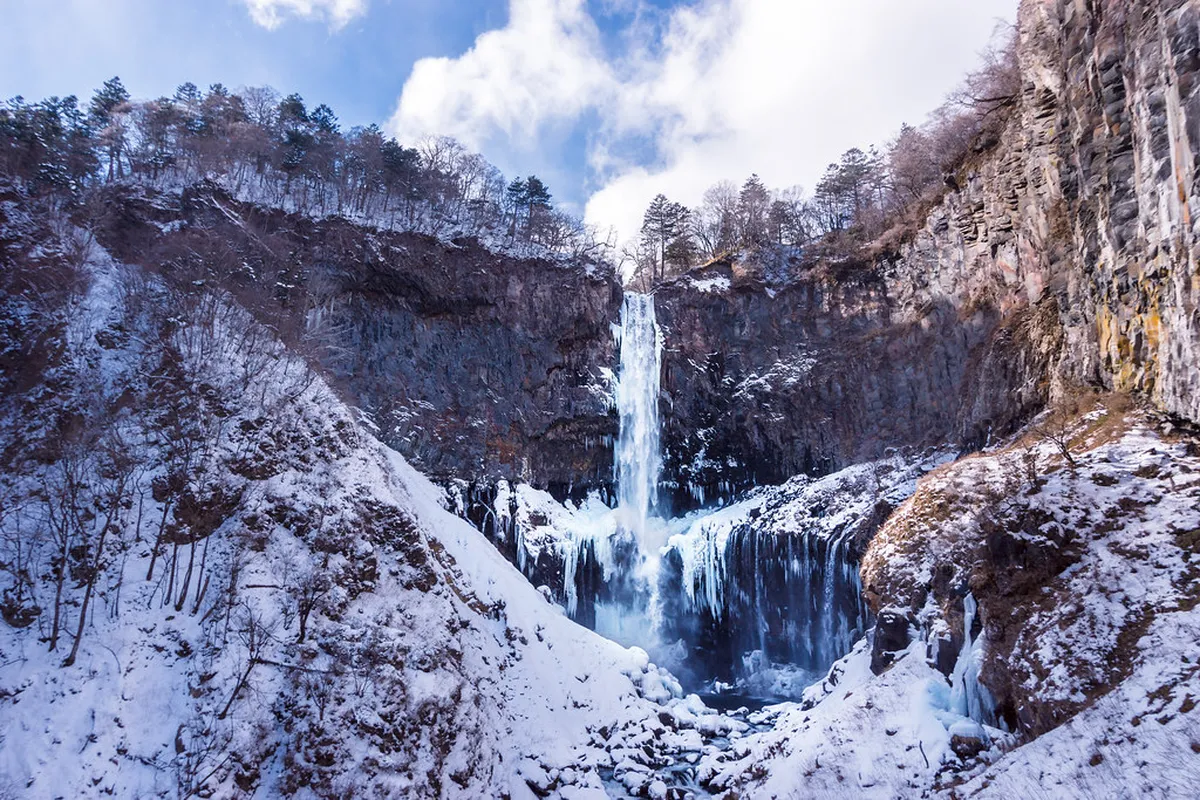
The nikko winter tour got us to Kegon Falls just as the morning sun hit the ice columns, and the whole gorge glowed blue. Our guide timed the Toshogu stop before the crowds arrived. Bring proper boots because the shrine paths were packed with snow.
Standing at the Shinkyo Bridge with snow on the railings and steam off the Daiya River was the quiet highlight. The small-group pace meant we lingered at the cedar avenue without feeling rushed. Very smooth logistics from Nikko station.
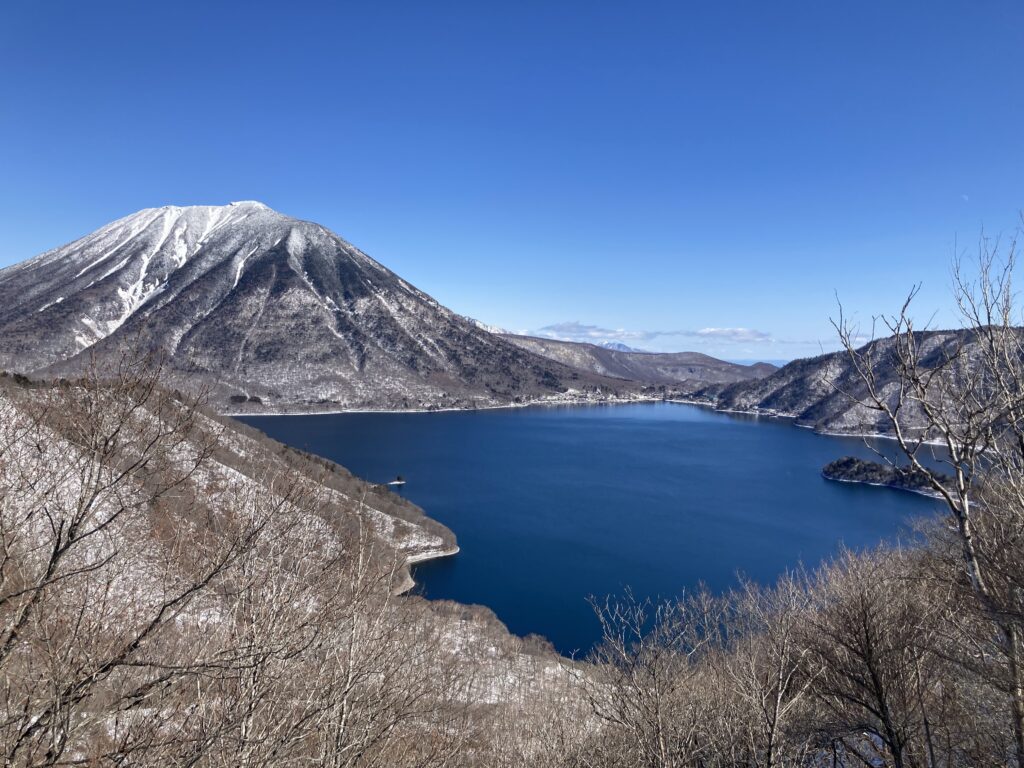
The Nikko shrine tour packed a lot into one day and the carved gate at Toshogu was worth the chilly wait. Lake Chuzenji was half frozen and Nantai looked enormous across the water. A 4 only because our van heater struggled on the mountain road.
Booked the nikko winter tour tickets on short notice and had zero issues. Ryuzu Falls was a wall of icicles and the light through the cedars made it glow gold. The guide knew exactly where the sleeping-cat carving was hidden.
Mount Nantai mirrored in the still lake water at midday was the moment I keep coming back to. This Nikko landmarks trip covered the shrines, the falls, and the lake without ever feeling like a checklist. Dress in layers, the elevation drops the temperature fast.
The detail on the Yomeimon gate with a light snow falling felt unreal. Our nikko winter tour guide explained the shogun history at the mausoleum without droning on. Fingers went numb so pack better gloves than I did.
Even in early summer booking I planned ahead, and the winter departure I took back in February was well run. The skip-the-line Nikko shrine access at Toshogu saved a long queue in the cold. Ryuzu and Kegon both had that frozen-mist look.
Walking the ancient cedar path with fresh snow underfoot and almost no one around was the calmest travel morning I have had in Japan. The nikko winter tour tours run tight schedules but our driver still gave us time at each viewpoint. Kegon Falls at golden hour capped it off.
We left Nikko station just after sunrise and beat the buses to Lake Chuzenji. The frozen shoreline and the steam rising off the onsen town below was a strong finish. Guide was patient with my endless photo stops.
The itinerary was fine and the shinkyo bridge tour segment photographed beautifully, but heavy cloud hid Nantai for most of our lake visit. Kegon Falls still looked frozen and dramatic. Just know that mountain weather can flatten the views.
Everything you need to know for your journey
The shrine is open daily from 09:00 to 16:00, seven days a week.
Yes, last admission is typically 30 minutes before the 16:00 closing time, so plan to enter by 15:30 at the latest.
Adult admission to the main grounds is 1,600 JPY, payable in cash at the ticket counter.
Bag checks are minimal at the main gate, though staff may look inside larger bags near the Honden and Yakushido interiors.
Photography is allowed outdoors around Yomeimon Gate and the Sacred Stable, but it is prohibited inside the Honden and during the Crying Dragon demonstration in Yakushido Hall.
Arriving between 09:00 and 10:30 helps beat tour buses and avoid icy path crowds that build up later in the day.
Warm, layered clothing and sturdy shoes with good grip are recommended, since the precinct is outdoors and the 207-step climb can ice over.
Take the Tobu Limited Express or JR Tohoku Shinkansen to Nikko, then a short bus or 30-minute walk from Tobu-Nikko or JR Nikko Station to the address at 2301 Sannai, Nikko-shi, Tochigi 321-1431.
Yes, children generally enjoy spotting the carved Sleeping Cat and Three Wise Monkeys, though strollers are difficult on the stone steps and a carrier works better.
Pre-booked tickets can typically be rescheduled up to 24 hours ahead, but the 1,600 JPY fee paid on-site is non-refundable once entry occurs.
Rinno-ji Temple, Futarasan Shrine, Taiyuinbyo Mausoleum, and Shinkyo Bridge are all within a 15-minute walk and pair naturally with the shrine visit.
Please contact us for more information.
Part of the same UNESCO listing as Toshogu, this Buddhist temple houses three gilded wooden Buddha statues in its Sanbutsudo Hall.
An older Shinto shrine dedicated to the mountain deities of Nikko, with a quieter, less ornate atmosphere than Toshogu.
A vermilion sacred bridge spanning the Daiya River, considered one of Japan's three finest bridges.
The mausoleum of shogun Tokugawa Iemitsu, smaller in scale but similarly decorated with intricate carvings.
A modern museum just outside the shrine grounds displaying Tokugawa-era artifacts and treasures.
One of Japan's oldest Western-style hotels, operating since the 1870s near the Shinkyo Bridge area.
A modest, family-run inn popular with independent travelers exploring the shrine area on foot.
A cluster of mid-range hotels and ryokan clustered around the station serving as a base for shrine visits.
A hostel-style lodge offering both dorms and private rooms geared toward budget travelers.
Join thousands of happy travelers who have discovered this incredible experience
Book Your Experience Now