Open today · 08:00 – 17:00

Toshogu Shrine Nikko

Toshogu Shrine Nikko — Reserved Entry to Ieyasu's Mausoleum

Cedar shadow over carved gold, silence beneath five thousand figures

148K+ travelers chose this
Free Cancellation
Right now: Moderate — summer weekday Midday sun in cedar-forest courtyard; carry water
3-5 hours recommended
1 Languages
Up to 15 guests
Free Cancellation
Free cancellation Instant confirmation Mobile voucher Verified partner Skip-the-line
55
buildings
Across the shrine precinct
8
National Treasures
Including Yomeimon gate
500+
carvings
Adorn the Yomeimon gate
207
steps
Climb to Ieyasu's tomb
1999
UNESCO year
World Heritage inscription
Choose your ticket

Ticket options at a glance

Compare fares, pick the fit — all bookings are mobile-voucher and eligible for free cancellation where shown.

Tokyo to Nikko: Toshogu Shrine & Kegon Falls Day Tour 10 hr 30 min
Guided Experience

Tokyo to Nikko: Toshogu Shrine & Kegon Falls Day Tour

4.5 (1411)
€76
  • Expert local guide
  • Small group
  • Skip-the-line access
  • Free cancellation
Book this ticket
Private Full-Day Nikko UNESCO Heritage Tour from Tokyo 11 hr
Luxury / Private

Private Full-Day Nikko UNESCO Heritage Tour from Tokyo

4.9 (382)
€404
  • Private experience
  • Personal attention
  • Premium amenities
  • Free cancellation
Book this ticket
Compare options

Which ticket fits your trip?

Choosing the right ticket before you queue matters at toshogu shrine nikko, since the entry-only pass, the combo ticket, and the museum-only pass unlock different parts of the complex. This quick guide breaks down what each tier actually covers so you're not stuck upgrading mid-visit.

Entry-Only Ticket Main precinct access Top pick
Combo Ticket Shrine + Museum
Museum-Only Ticket Treasure Museum
What's included Main precinct, Yomeimon Gate, Yakushido, Sleeping Cat, mausoleum climb Treasure Museum galleries only
Access to main shrine and Yomeimon
Access to Treasure Museum
Price 1,600 JPY adult 1,000 JPY adult
Best for First-timers on a tight budget Return visitors skipping the shrine grounds

Verdict: First-time visitors on a toshogu shrine nikko tour should default to the combo ticket for full access, while budget-focused travelers on skip-the-line toshogu shrine nikko tickets can stick with entry-only and skip the museum add-on.

Is it worth it?

Worth it for most first-time visitors

At 1,600 JPY entry-only, toshogu shrine nikko delivers a dense payoff: multiple National Treasures packed into a compact hillside complex, from the lacquered Yomeimon Gate to the famed carved panels of the sleeping cat and the three wise monkeys. For roughly the price of a lunch, you get gilded woodwork, the Tokugawa mausoleum, and craftsmanship you simply won't see elsewhere among Nikko landmarks. Reviewers often balk at combo-ticket upsells, but the base fee alone covers the carvings and grounds that most people come for. This nikko toshogu tour pays off for history buffs, architecture lovers, and anyone doing the region as a day trip. It's thinner value if you dislike stairs or crowds. The self-guided route works fine without paying for guided toshogu shrine nikko tours, though a tour adds context. Straightforward toshogu shrine nikko tickets are cash-only at the counter.

What makes it worth it

  • Several National Treasures in one compact site
  • Base fee cheaper than a meal
  • Iconic carvings included in entry ticket
  • No guide needed to enjoy grounds

Keep in mind

  • Combo-ticket upsells inflate the real cost
  • 207 steps and midday crowds
  • Cash-only at the counter
  • Short visit for slower-paced travelers

Bottom line: For 1,600 JPY, a skip-the-line toshogu shrine nikko visit earns its fee for anyone who values history and craftsmanship.

Featured Experiences

Popular tours & activities

Hand-picked experiences loved by thousands of travelers

Recommended Experience

Powered by GetYourGuide

Another traveler favorite

Powered by GetYourGuide
Nikko World Heritage Day Trip from Tokyo 10 hours Free Cancellation

Nikko World Heritage Day Trip from Tokyo

Escape Tokyo for Nikko's sacred shrines, thundering waterfalls & alpine lake on a guided 10-hour bus tour.

4.6 (71)
FromFrom €97.08
See details
Tokyo to Nikko: Toshogu Shrine & Lake Chuzenji Day Trip 10 hours Free Cancellation

Tokyo to Nikko: Toshogu Shrine & Lake Chuzenji Day Trip

A 10-hour journey from Tokyo through UNESCO shrines, mountain roads, and cascading waterfalls.

4.2 (15)
FromFrom €66.15
See details
Nikko Toshogu Shrine Private Walking Tour 2.5 hours Free Cancellation

Nikko Toshogu Shrine Private Walking Tour

Explore Nikko's UNESCO World Heritage shrines on a 2.5-hour private guided walk through Edo-period splendor.

4.5
FromFrom €82.93
See details
Your journey

Step-by-step — what your day looks like

1

Sannai entrance and torii

Pass through Ishidorii stone torii and buy tickets at the entrance counter

2

Five-story pagoda and Omotemon

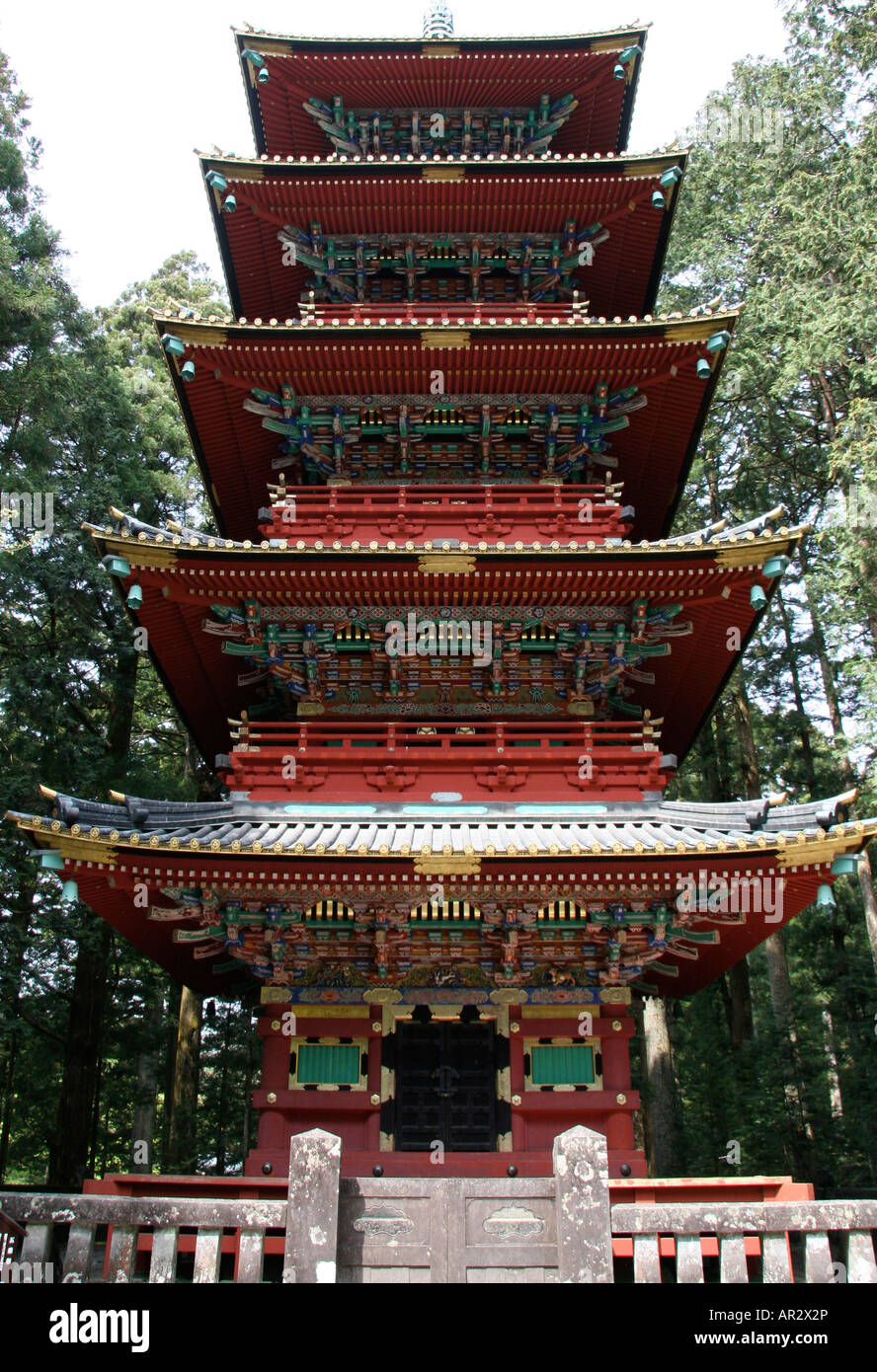
View the pagoda representing earth, water, fire, wind and void before the main gate

3

Yomeimon Gate and stable courtyard

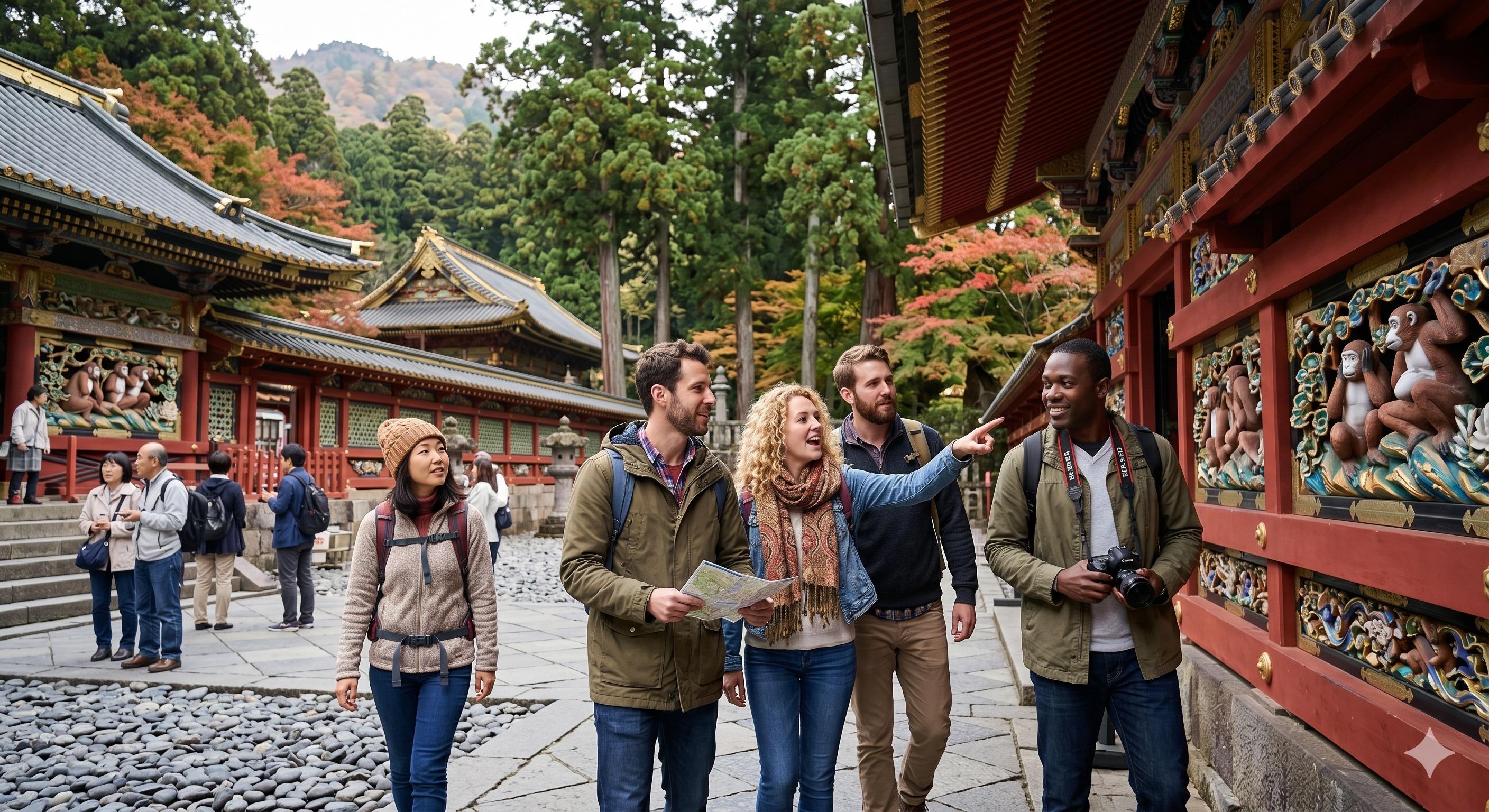
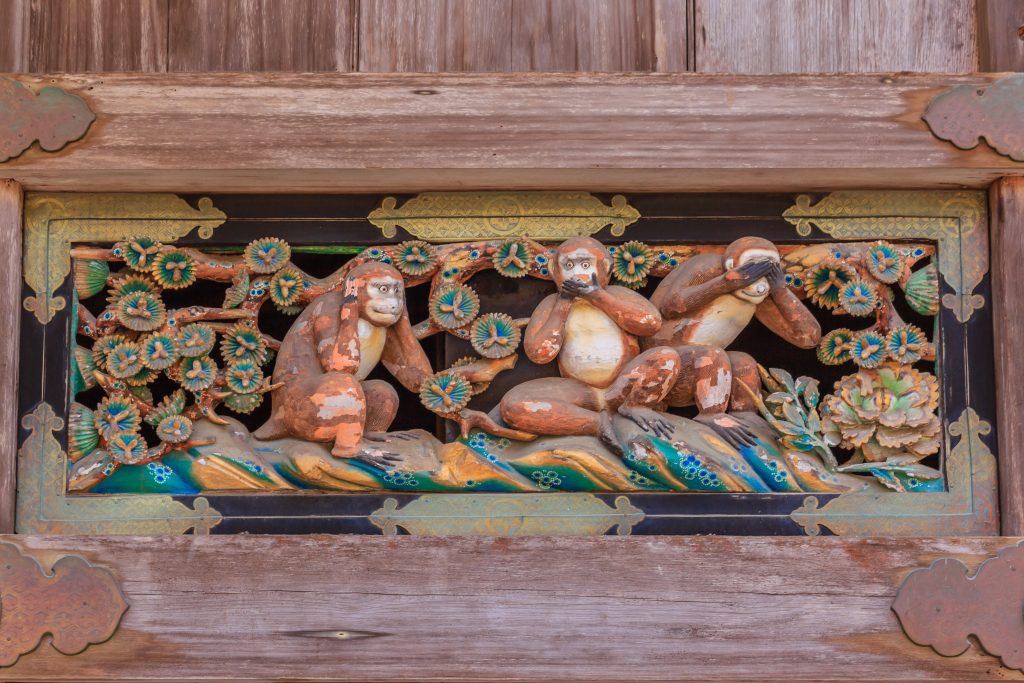
See the gilded Yomeimon Gate and the Three Wise Monkeys carving on the sacred stable

4

Honden and Karamon gate

Remove shoes to enter the main hall, then pass the white-and-gold Karamon

5

Sakashitamon and 207 steps to Okumiya

Climb the stone steps past the Sleeping Cat carving to Ieyasu's tomb

6

Nikko Toshogu Museum (optional)

Combination-ticket holders can view treasures and historical artifacts

What you'll see

Highlights not to miss

Yomeimon Gate

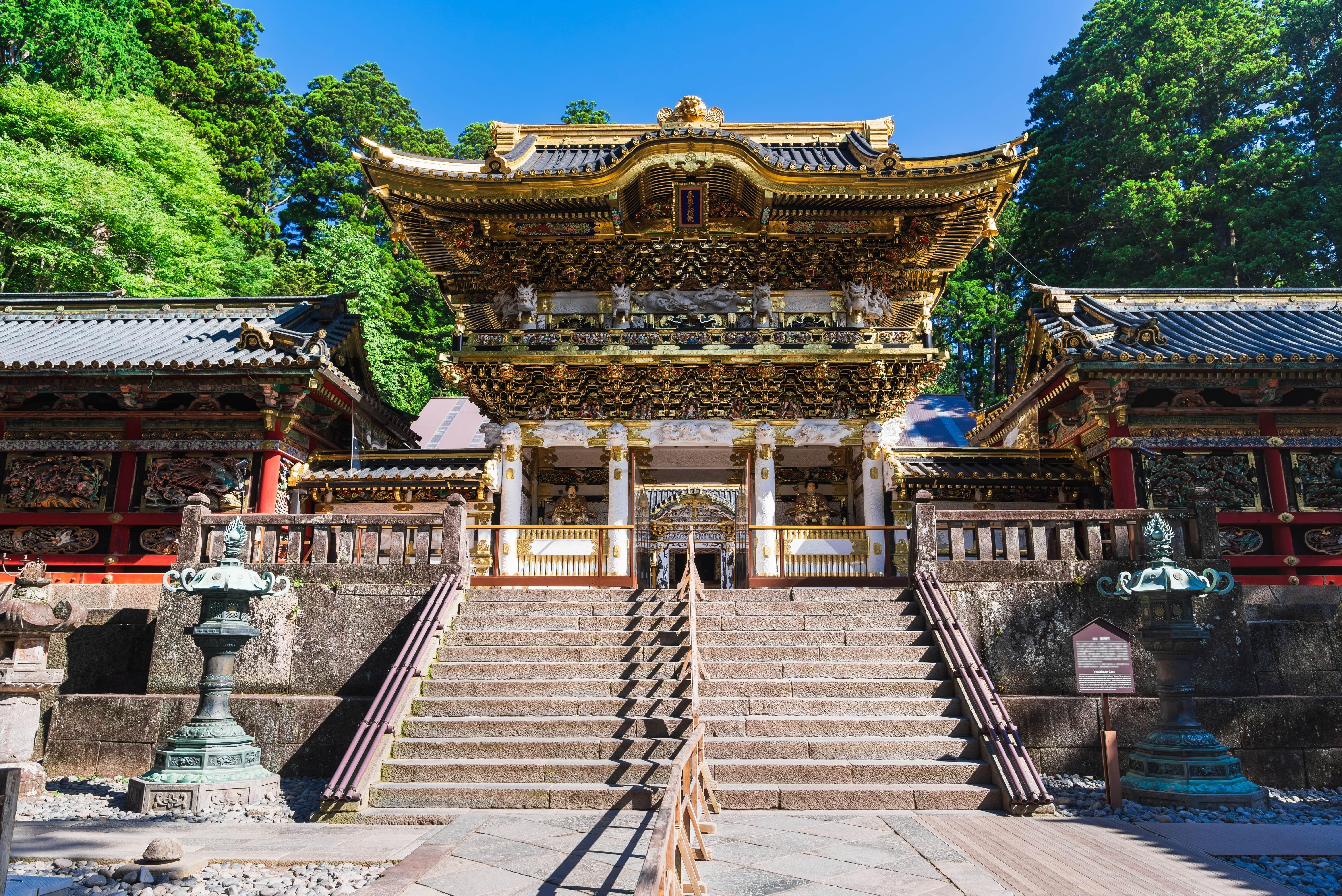
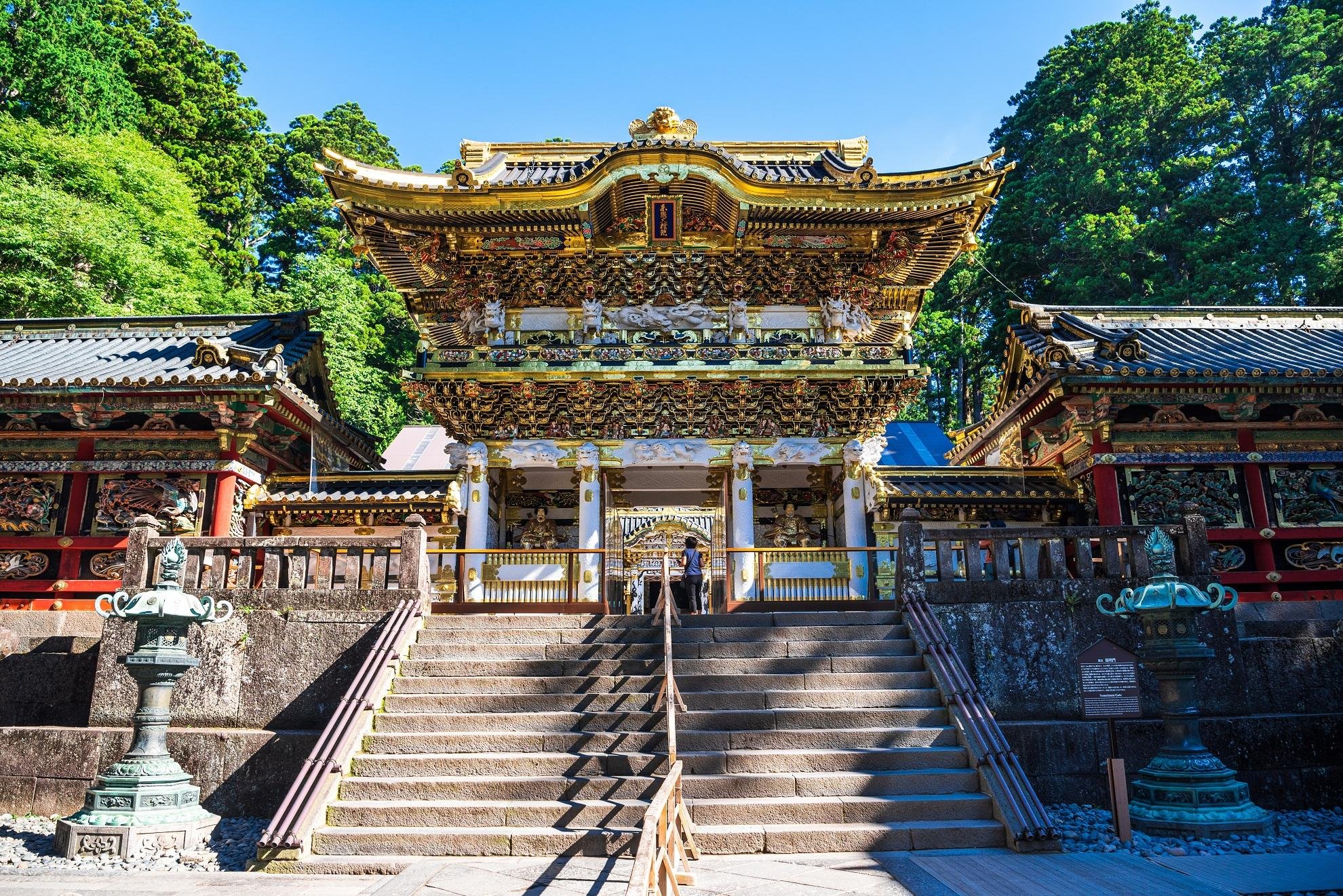
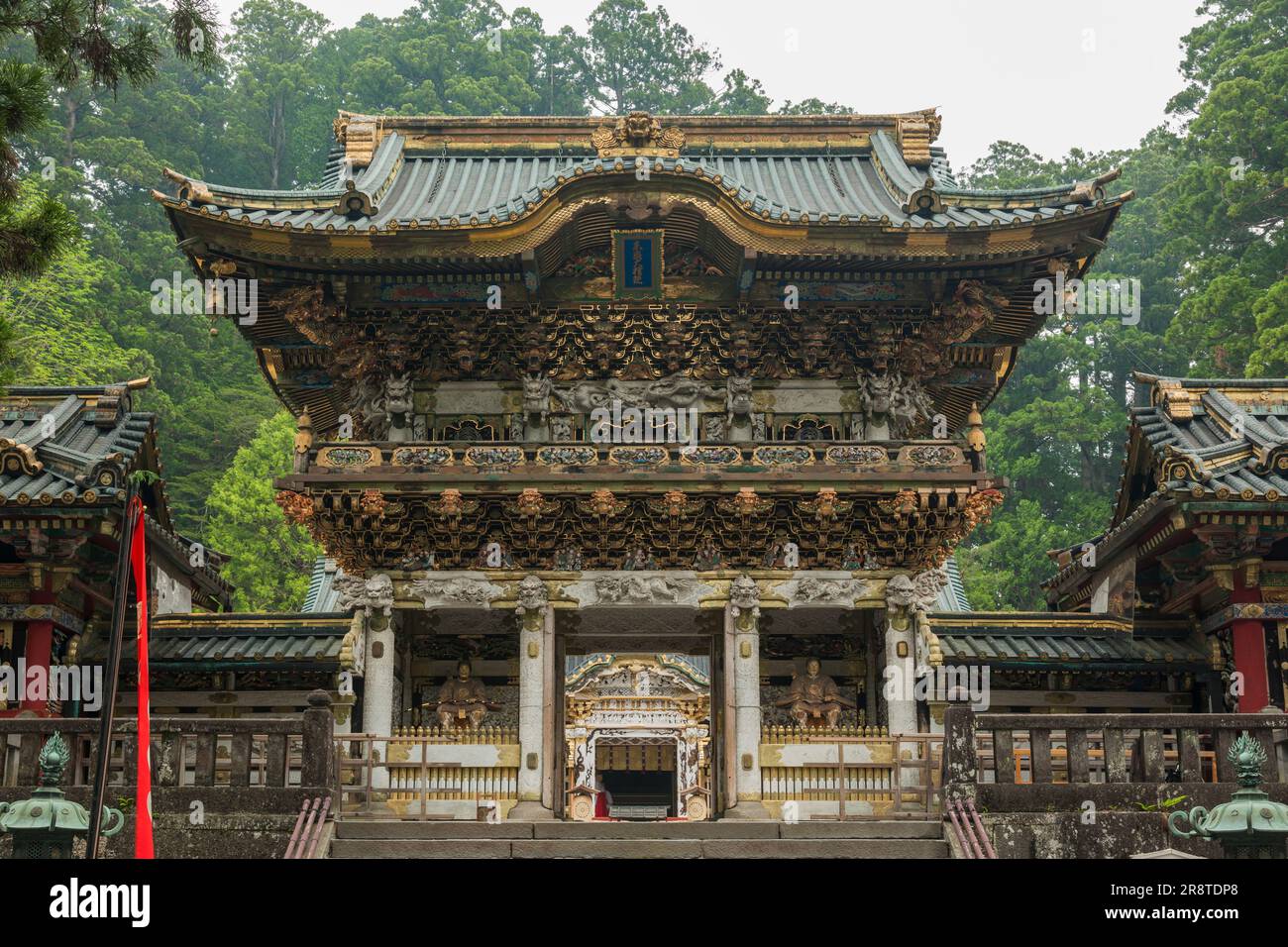
Known as the 'Sunset Gate' because visitors could once admire it until dusk, this gate carries more than 500 carvings of mythical beasts, sages, and children, including a painted dragon tucked into the rafters that many visitors miss. It is regarded as the most lavishly decorated gate in Japan.

Sleeping Cat carving

Tucked above the Sakashitamon gate on the path toward the inner sanctuary, this small wood carving attributed to sculptor Hidari Jingoro depicts a cat dozing beside two sparrows, symbolizing an era of peace secure enough that natural predator and prey could rest undisturbed. It measures only about 30 centimeters across yet draws steady crowds for photographs.

Three Wise Monkeys stable carving

Carved into the Sacred Stable building near the shrine entrance, this panel shows monkeys covering their eyes, ears, and mouth, illustrating a Confucian maxim about avoiding what is improper. It is one of eight monkey-themed panels on the same building depicting a monkey's life cycle.

Karamon Gate

Rebuilt in 1636 and finished in white and gold, this Chinese-style gate once could only be passed by shogunate vassals and feudal lords granted an audience with the shogun. Its transom carvings depict Chinese sages, and it remains one of the shrine's designated national treasures.

Five-Story Pagoda

Standing near the main entrance, this pagoda's five tiers represent earth, water, fire, wind, and void in ascending order, a Buddhist cosmological scheme rendered in a Shinto shrine setting. It was rebuilt in 1818 after the original 1650 structure burned down.

Okumiya and Ieyasu's Tomb

Reached by climbing the 207 stone steps behind the Sakashitamon gate, this rear precinct holds Tokugawa Ieyasu's tomb beneath a bronze pagoda, deliberately plainer than the ornate main shrine below. The inner sanctuary buildings here were closed to the public until 1965.

The experience

What the visit is really like

You arrive early, ideally between 08:00 and 10:00, before the tour buses fill the approach mid-morning. You pass beneath the granite torii and the five-story pagoda, then join the queue at the counter, where entry runs 1,600 JPY per adult, paid in cash. The path climbs almost at once through cryptomeria that block most of the sky. You reach the Sacred Stable and stop for the three wise monkeys carved above it, then move up to the Yomeimon, where you slow down — the detail here defeats a quick glance. You find the inverted column if you look for it. Beyond the gate you pause at the sleeping cat, small and easy to miss, before committing to the stairs behind it. Those stairs matter: the full route to Ieyasu's tomb involves 207 steps through the forest, and you feel every one on the way up. At the top you stand at the quiet bronze urn, far from the crowds massing below. Coming down, you circle back through the drum tower and the sutra library. A measured toshogu shrine nikko tour of the grounds takes most of a morning, and you leave before the corridors near the entrance turn shoulder to shoulder.

Everything You Need to Know

Your complete experience guide

All the details about your upcoming adventure in one place

Discover Toshogu Shrine Nikko

Set within the cedar forests of the Nikko mountains, Toshogu Shrine Nikko is the lavishly decorated mausoleum of shogun Tokugawa Ieyasu, founder of the Edo period dynasty. Its Yomeimon Gate, carved sleeping cat, and gilded lacquer work make the complex one of the most celebrated Nikko landmarks and a designated UNESCO World Heritage property. Guided toshogu shrine nikko tours introduce the Shinto and Buddhist symbolism behind the woodwork, the five-story pagoda, and the sacred stable that inspired its famous carvings.

Some 15,000 craftsmen labored for roughly two years to complete the shrine complex that opened in 1636, and their signature survives in more than 5,000 carved figures spread across the grounds. Toshogu shrine nikko is the mausoleum of Tokugawa Ieyasu, the warlord who unified Japan and founded the shogunate that governed the country for over 250 years. His grandson Iemitsu rebuilt the original modest structure into the lacquered, gilded ensemble that visitors encounter today. The site occupies a slope of ancient cryptomeria within the Nikko mountains, a setting the Tokugawa chose deliberately: Ieyasu wished to be enshrined as a guardian deity watching over the eastern approach to Edo. That intention still shapes why this place matters. It is one of the few sites in Japan where Shinto and Buddhist architecture were fused without apology, a rare survival of pre-Meiji religious syncretism, and it anchors the UNESCO World Heritage listing of the Shrines and Temples of Nikko inscribed in 1999. The architecture rewards slow looking. The Yomeimon, the shrine's central gate, carries so much detail — dragons, sages, children at play, mythical qilin — that it earned the nickname Higurashi-mon, the gate at which one could gaze until dusk. One of its twelve columns bears a deliberately inverted pattern, a flaw reportedly introduced so the finished work would not invite the envy of the gods. Above a nearby stable panel sits the famous relief of three monkeys, hear no evil, speak no evil, see no evil, one of the oldest and most reproduced carvings in the country. Deeper in, the sleeping cat attributed to the sculptor Hidari Jingoro guards the passage toward Ieyasu's tomb, reached by a climb through cedar shade. Color is central to the effect. Where most Japanese shrines favor restraint, this one embraces vermilion, black lacquer, and gold leaf applied in broad expanses, a Momoyama aesthetic pushed to its limit. Any thoughtful toshogu shrine nikko tour lingers on this contrast between the sober forest and the ornamental buildings. The five-story pagoda near the entrance, the bronze and stone lanterns donated by feudal lords, and the sutra library round out a compound that reads as both temple and political statement — a Tokugawa declaration in wood, metal, and pigment, still legible four centuries on among Nikko's mountain landmarks.

One column of the Yomeimon was set upside down on purpose, so the finished gate would not tempt the envy of the gods.

Dress code

There is no formal dress code at Toshogu Shrine Nikko, but visitors remove their shoes to enter the Honden (main hall) and a few interior structures, so slip-on footwear or clean socks make the process easier. Comfortable walking shoes are recommended given the gravel paths and the 207-step climb to the inner sanctuary.

Bags & security

Bag checks are not routinely enforced at the outer torii, but staff may ask visitors to open large backpacks near the Honden and Okumiya due to the fragile lacquerwork and gilding inside. Coin lockers are available near Tobu Nikko Station for those arriving with luggage, since there is no baggage storage inside the shrine grounds itself.

Photography

Photography is prohibited inside the Honden (main hall) and the Karamon gate interior to protect the painted screens and carvings, though exterior shots of Yomeimon Gate and the five-story pagoda are permitted. Tripods and drones are not allowed anywhere on the shrine grounds, and flash photography near the Nemuri Neko carving is discouraged to protect the centuries-old pigment.

Families & strollers

Children generally handle the main courtyard and Yomeimon Gate area well, but the 207-step climb to the Okumiya can tire younger kids, so plan for rest stops. Strollers are difficult to manage on the stone steps and are better left at the base near Sakashitamon.

Accessibility

The 207 stone steps to the Okumiya (inner sanctuary) and Ieyasu's tomb have no elevator or ramp alternative, making that section inaccessible to wheelchair users. The lower precincts around Yomeimon Gate and the main courtyard are mostly level gravel and stone paving, though uneven in places after rain.

Food & drink

Eating and drinking are not permitted within the shrine's inner precincts, including near the Honden and Okumiya. Vending machines and small tea houses cluster along the approach path near the Shinkyo Bridge and the entrance to the Nikko Toshogu Museum, just outside the paid area.

Not allowed

× Drones × Tripods × Selfie sticks near Honden × Flash photography inside buildings × Large backpacks near Karamon × Food and drink inside precincts × Smoking × Open flames × Loud speakers or amplified audio × Pets off-leash × Bicycles on shrine paths × Camping equipment

What to bring

✓ Cash for the 1,600 JPY entry fee ✓ Comfortable walking shoes ✓ Slip-on footwear for interior removal ✓ Water bottle ✓ Light jacket for cedar-forest shade ✓ Sun hat ✓ Small day bag rather than large backpack

Opening hours

Mon 08:00 – 17:00

Last entry 30 min before close

Tue 08:00 – 17:00
Wed 08:00 – 17:00

Quietest weekday typically

Thu 08:00 – 17:00
Fri 08:00 – 17:00
Sat 08:00 – 17:00

Tour bus groups from mid-morning

Sun 08:00 – 17:00

Busiest day of the week

At a glance

Hours

Daily 08:00–17:00, last entry 30 min before close

Address

2301 Sannai, Nikko, Tochigi 321-1431, Japan

Access

207 stone steps to the inner sanctuary, uneven forest paths

Best time

Arrive 08:00–10:00 to beat tour bus groups

Facilities

Coin lockers at Tobu Nikko Station, no on-site storage

Getting there

Public transport · 1h45–2h from Tokyo · Around 2,850–4,000 JPY one-way express fare

Take the Tobu Nikko Line direct limited express from Asakusa Station in Tokyo to Tobu-Nikko Station, then the World Heritage Sightseeing Bus from bus stop 2B or walk about 30–40 minutes uphill.

Car · 2h from central Tokyo · Parking roughly 500–1,000 JPY per day

Drive via the Nikko-Utsunomiya Road and Route 119, parking in the paid lots near the Nikko Toshogu Museum or Rinno-ji Temple.

Walk · 35–45 min from station · Free

From Tobu-Nikko or JR Nikko Station, walk up the main approach road past Shinkyo Bridge and through the cedar-lined path to the shrine precinct.

Taxi · 10 min from station · Approximately 1,200–1,500 JPY

Taxis wait outside both Tobu-Nikko and JR Nikko stations for a short direct ride to the shrine's parking area.

Cancellation policy

Entry tickets are sold on-site at the counter and are non-refundable once purchased, since the 1,600 JPY entry-only fee is paid in cash at the gate rather than reserved in advance. If a private guided tour was booked through a separate operator, that operator's own cancellation window applies, not the shrine's own policy.

Plan your time

How long do you need?

Recommended time

2-3 hours

Two to three hours covers the main halls, the carved gates, and the 207-step climb to Ieyasu's tomb at a comfortable pace; add 30-45 minutes if you want to linger over the carvings or the trip includes the Okumiya inner shrine. Arriving in the 08:00-10:00 best arrival window means shorter lines at the ticket counter and open space on the tomb staircase, since tour buses tend to fill the courtyard mid-morning. Skip-the-line toshogu shrine nikko tickets bought ahead help, but the bigger time-saver on any toshogu shrine nikko tour is simply beating the buses to the gate, not the ticket format itself.

Crowd levels through the day

Opening rush (08:00-09:00) Light
Prime window (09:00-10:00) Building
Tour bus wave (10:00-12:00) Heavy
Midday peak (12:00-14:00) Heavy
Afternoon taper (14:00-16:00) Moderate
Last hour (16:00-17:00) Light
Plan ahead

When to go — year at a glance

Weather · crowds · average price — dots go green to amber to red as each metric rises.

Spring

March through May brings mild temperatures around 10–18°C and the Yayoi Festival in April draws moderate crowds. Cherry blossoms appear in early April in the surrounding Nikko hills, adding scenery to the walk from Shinkyo Bridge.

Summer

June through August is humid with temperatures reaching 25–30°C, and July is a shoulder period between spring peaks and the busy Obon week in mid-August. Cedar-forest shade around the shrine keeps the paths noticeably cooler than the town below.

Autumn

Late October through mid-November brings peak foliage crowds, especially around the Shuki Taisai Grand Festival in mid-October with its procession of a thousand samurai-costumed participants. Weekday visits in early November avoid the heaviest weekend traffic.

Winter

December through February sees temperatures near or below freezing and occasional snow, but far fewer visitors and a winter illumination display around the New Year period. Some walkways can be icy, so sturdy footwear matters more than usual.

Insider tips

Helpful tips for your visit

Bring cash only

The on-site ticket counter accepts cash exclusively for the 1,600 JPY entrance fee and does not take credit cards.

Exchange online vouchers first

Visitors with pre-purchased vouchers must exchange them for physical passes at Tobu-Nikko Station before reaching the gate.

Wear slip-on shoes

Shoes come off to enter the Honden and a few other interior halls, so footwear that is easy to remove saves time.

Look up at Yomeimon

The gate carries over 500 carvings, including a painted dragon in the rafters that is easy to overlook.

Pace the 207 steps

The stone steps to the Okumiya and Ieyasu's tomb are steep in sections, so a slow, steady climb works better than rushing.

Combine with Rinno-ji and Futarasan

Both neighboring UNESCO sites sit within a five-minute walk and require separate tickets.

Check seasonal hour changes

While hours run 08:00–17:00 much of the year, always confirm current seasonal adjustments on the official website before traveling.

Where to meet

Meeting points

Ishidorii Stone Torii

2301 Sannai, Nikko, Tochigi 321-1431, Japan

Main entrance torii, common tour-group meeting spot

Get directions

Omotemon Gate

2301 Sannai, Nikko, Tochigi 321-1431, Japan

First gate before the ticket counter, sheltered from rain

Get directions
The story

The history behind the site

Tokugawa Ieyasu died on June 1, 1616, at Sunpu Castle. His will requested a modest mausoleum at Nikko, a mountain site sacred since the priest Shodo founded temples there in 766. Within a year his remains were moved north. The shogun was deified under the posthumous title Tosho Daigongen, granted by the imperial court in 1617. The first shrine raised over him was restrained, in keeping with his instructions. His grandson chose otherwise. Between 1634 and 1636, Iemitsu ordered a full reconstruction, a project recorded in the Kanei-era rebuilding accounts. Contemporary sources report roughly 15,000 craftsmen laboring for about seventeen months, at a cost said to reach 568,000 ryo of gold. The result was the 55-building complex that stands today: the Yomeimon gate with its 508 carvings, the sleeping cat attributed to Hidari Jingoro, and the three wise monkeys on the sacred stable. The lavish polychrome and gold leaf of toshogu shrine nikko broke sharply from the founder's asceticism. The extravagance served a purpose. Annual imperial envoys and daimyo processions along the Nikko Kaido reinforced Tokugawa legitimacy across the Edo order. This political theatre made the mountain sanctuary among the most consequential of Nikko landmarks. Visitors on toshogu shrine nikko tours still climb the 207 steps that thread past these monuments toward Ieyasu's tomb. The complex survived where others fell. During the 1868 Boshin War, imperial forces spared it from destruction; the Meiji separation of Shinto and Buddhism in 1871 divided its temples but left the shrine standing. On December 2, 1999, UNESCO inscribed the Shrines and Temples of Nikko as a World Heritage Site, citing outstanding craftsmanship and the sacred landscape. Those researching a toshogu shrine nikko tour or booking toshogu shrine nikko tickets encounter a monument whose iron-hard lacquer, carved beams, and mountain cedar avenue have endured four centuries of war, fire, and reform largely intact.

766

The priest Shodo founds the first temples on Nikko's sacred mountain.

1616

Tokugawa Ieyasu dies at Sunpu Castle and is interred at Nikko.

1617

The court grants Ieyasu the deified title Tosho Daigongen.

1634-1636

Iemitsu rebuilds the shrine into the 55-building complex seen today.

1868

Imperial forces spare the shrine during the Boshin War.

1871

Meiji religious reforms separate the shrine from its Buddhist temples.

1999

UNESCO inscribes the Shrines and Temples of Nikko as World Heritage.

Photo spots

Best photo spots

Ishidorii Stone Torii

Best light · Morning light

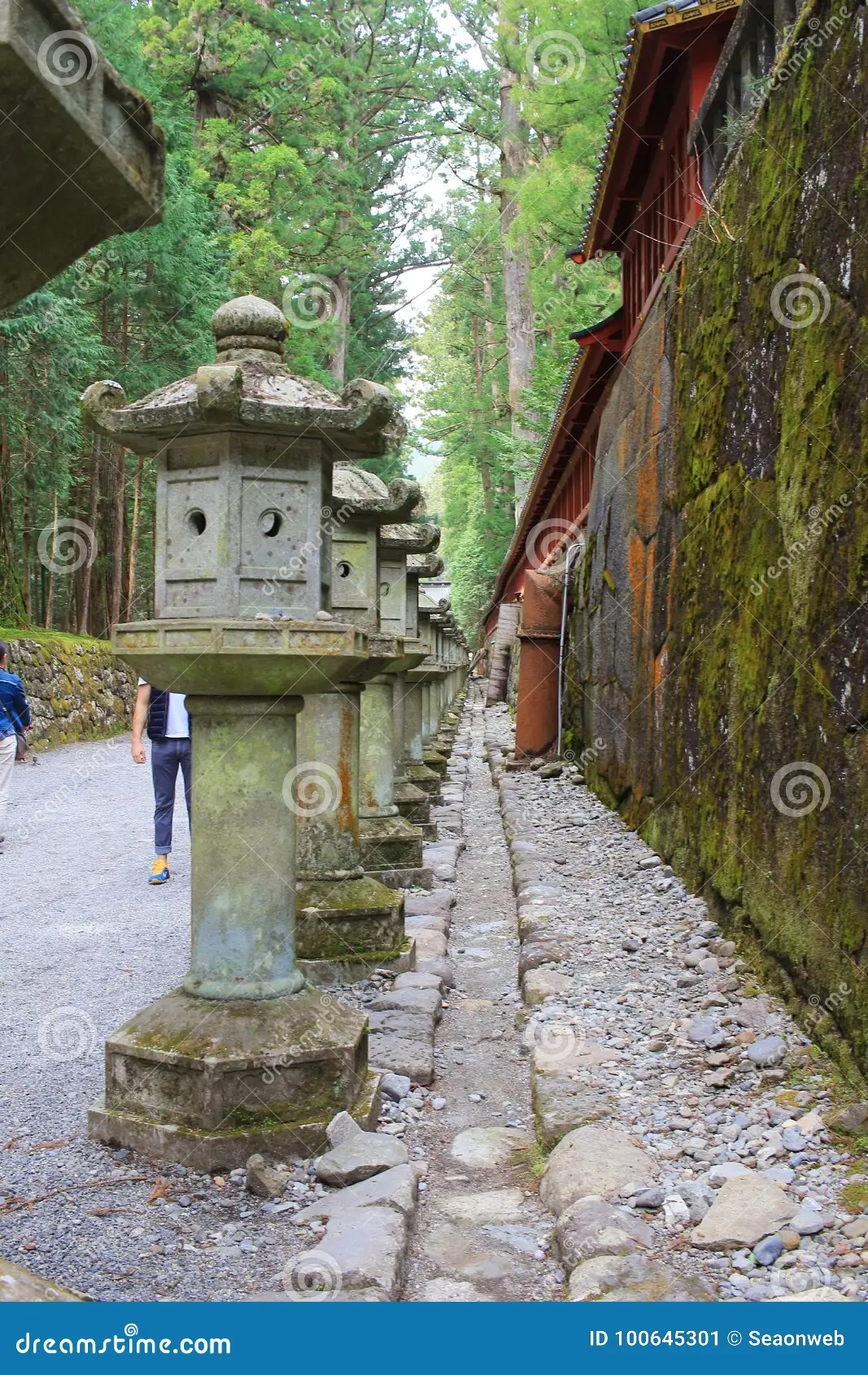
The granite torii gate marks the formal start of the toshogu shrine nikko approach, framed by tall cryptomeria cedars and stone lanterns. Stand at the base of the stone staircase leading up from the path for a symmetrical shot through the gate toward the pagoda beyond.

Sacred Stable Three Wise Monkeys

Best light · Before 09:00

The weathered wooden Shinkyusha stable building carries the famous carved panel of the three monkeys covering eyes, ears, and mouth. Shoot from the courtyard at eye level with the panel, keeping a little distance since a rope barrier keeps visitors back from the building itself.

Yomeimon Gate

Best light · Golden hour, before 10:00

Known as the gate you could stare at all day, this gilded two-story gate is covered in over 500 carved figures, dragons, and white pillars. Photograph it straight-on from the stone courtyard below for the full symmetrical facade, or move closer to isolate individual carvings.

Sleeping Cat East Corridor

Best light · Early morning

The small Nemuri-neko carving sits above a low doorway in the East Corridor beside the Sakashitamon, on the route toward Ieyasu's tomb. The passage is narrow, so a compact camera or phone works better than a long lens, and only a quick shot is possible before the queue moves on.

Honden Main Hall Exterior

Photography is banned inside the Honden and its connecting halls, but the exterior lacquerwork and roofline are visible from the courtyard just before the Karamon gate. Frame the eaves and gilded trim from outside rather than attempting an interior shot.

Gallery

Moments from the experience

With kids

Visiting with kids

Visiting toshogu shrine nikko with young children works best when you treat it as a scavenger hunt rather than a straight climb, since the 207 steps to Ieyasu's tomb are the main physical hurdle for small legs. Kids tend to power through when the carvings become checkpoints rather than scenery.

Strollers

Paths are uneven gravel and stone with steps throughout, so strollers mostly cannot be pushed past the entrance area; a baby carrier or child backpack works far better for the climb to the tomb.

Best ages

Kids around 5 and up manage the 207 steps and long complex without needing to be carried; toddlers are fine if a carrier is used for the steeper sections.

Facilities

Modern Western-style restrooms sit near the entrance ticket office and at several points across the grounds, so plan bathroom stops before starting the harder skip-the-line toshogu shrine nikko tour route uphill.

Pacing

Break the walk into carving hunts: point out the three wise monkeys near the Sacred Stable first, then the elephant carvings, saving the sleeping cat as the reward just before the final tomb stairs.

Energy management

Let kids rest on benches in shaded spots partway up, and treat the vending machines and gift stall at the top of the 207 steps as a built-in finish-line incentive.

Customer Reviews

What travelers say

Real experiences from real travelers

4.4
Based on undefined reviews
1 ★ 820
2 ★ 610
3 ★ 1300
4 ★ 3900
5 ★ 14300
M
Marcus H.
United States · 2026-06-18

Gold leaf everywhere

The detail on the Yomeimon Gate is hard to overstate, every panel packed with carved figures and gilding. We arrived just after opening on a humid July morning and the cedar shade kept things cool. Give yourself more time than you think for the carvings alone.

Y
Yuki T.
Japan · 2026-05-02

Cedars and quiet

Walking the stone approach under the giant cryptomeria trees before reaching toshogu shrine nikko set the whole mood. The three wise monkeys carving is smaller than photos suggest but the crowd around it moves quickly. Rain the day before left the moss on the lanterns vivid green.

S
Sofia R.
Spain · 2026-04-21

Worth the climb to Ieyasu's tomb

The stairway up to Tokugawa Ieyasu's resting place is steep and the steps get slick, so decent shoes matter. Fewer people make it to the top, which made the forest silence up there the highlight for me. A Nikko shrine tour guide we overheard explained the sleeping cat carving, which we would have walked right past otherwise.

D
Daniel K.
Germany · 2026-03-09

Baroque of the East

I have seen a lot of temples in Japan and toshogu shrine nikko stands apart for sheer density of decoration. The vermilion against dark cedar trunks in late afternoon light is something photos flatten. We booked one of the toshogu shrine nikko tickets online and skipped a short queue at the main hall.

A
Amara O.
United Kingdom · 2026-07-05

Dragon that cries

The Yakushido hall with the echoing dragon ceiling was an unexpected favorite, a monk claps two blocks and the ring resonates only under the dragon's mouth. It was raining lightly which thinned the crowds. One of the more memorable toshogu shrine nikko tours moments for us.

B
Bruno M.
Brazil · 2025-11-14

Busy but manageable

Autumn colors around the complex were peaking in mid November and the maples framed the pagoda beautifully. It does get packed by late morning near the sacred stable. The UNESCO heritage signage is bilingual which helped us follow the layout.

C
Chloe L.
France · 2025-09-27

Craftsmanship overload

Every surface at this Nikko landmark seems carved, painted or gilded, from the storehouses to the bell tower. We joined a small-group toshogu shrine nikko tour that timed our entry to avoid the worst of the bus groups. The imported Dutch lantern near the inner shrine was a quirky detail I loved.

H
Hiroshi N.
Japan · 2026-02-11

Winter stillness

Coming in February meant frost on the stone lanterns and almost empty paths early in the day. The gold of the Karamon gate looked even richer against the bare cedars. Buying skip-the-line toshogu shrine nikko tickets in advance saved fumbling with cash at the window.

E
Emma W.
Australia · 2026-01-30

Better than expected

I nearly skipped it on a day trip from Tokyo and I am glad I did not, the Yomeimon Gate alone justified the journey. Sunlight caught the phoenix carvings around midday. A local Nikko landmarks map from the visitor booth pointed us to corners the tour groups miss.

L
Lucas F.
Canada · 2025-12-08

Grand and layered

The complex rewards slow wandering, tucked-away carvings of elephants sculpted by an artist who had never seen one. Cold clear December light made the gilding glint. Toshogu shrine nikko tours run frequently from the station area if you would rather not self-navigate.

FAQ

Frequently asked questions

Everything you need to know for your journey

Around the corner

Nearby landmarks worth a detour

Shinkyo Bridge

10 min walk

landmark

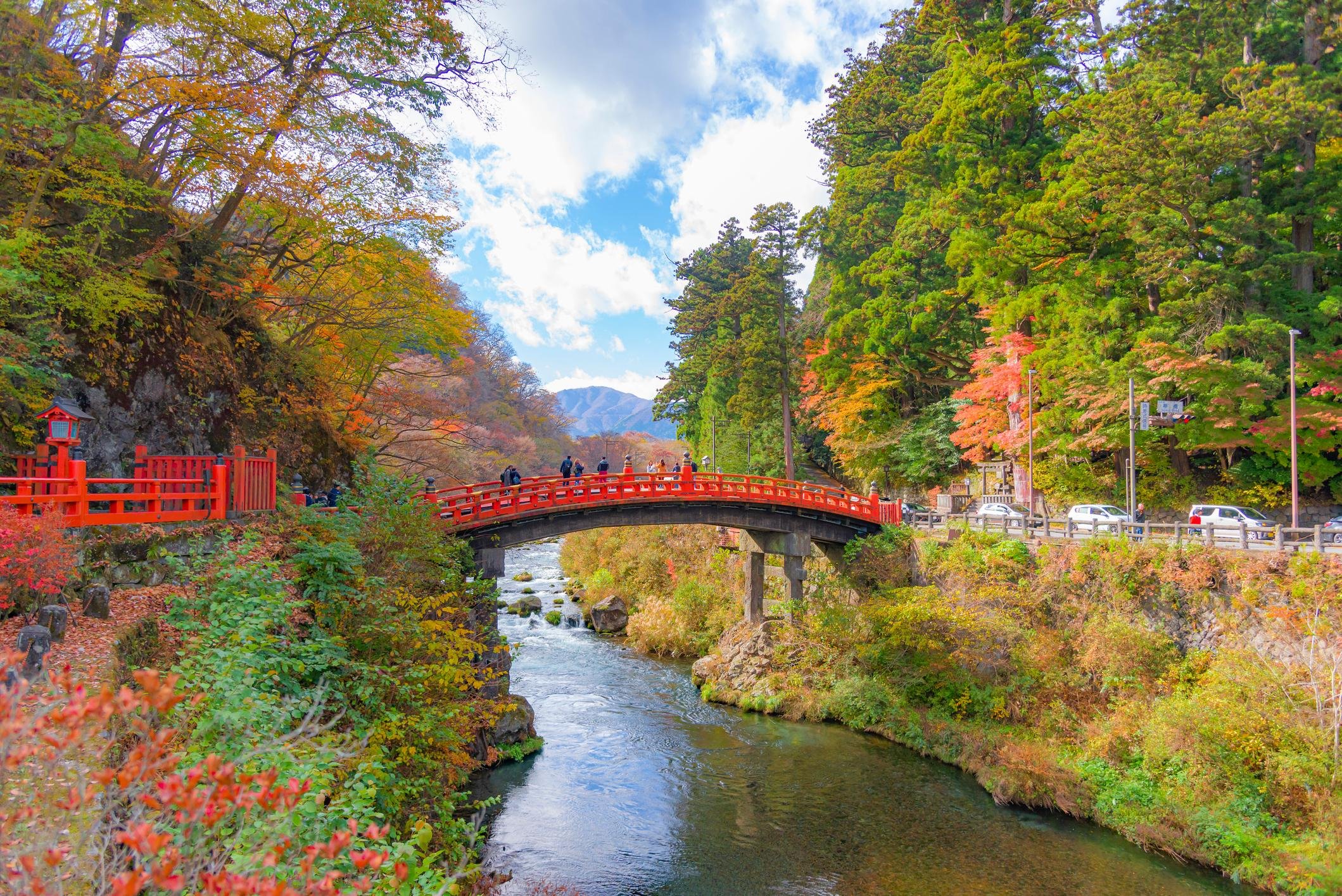
A vermilion sacred bridge over the Daiya River marking the traditional gateway to Nikko's shrine district. It is one of Japan's designated Important Cultural Properties.

Rinno-ji Temple

5 min walk

landmark

A Tendai Buddhist temple housing three gilded wooden Buddhist statues in its Sanbutsudo hall. It forms part of the same UNESCO listing as Toshogu Shrine.

Futarasan Jinja

5 min walk

landmark

An older Shinto shrine dedicated to the deities of Nikko's sacred mountains, predating Toshogu by centuries.

Taiyuinbyo

10 min walk

landmark

The mausoleum of shogun Tokugawa Iemitsu, built in a similarly ornate but more subdued style than Toshogu.

Nikko Toshogu Museum

On-site

museum

A treasure hall displaying historical artifacts, ceremonial items, and documents related to the shrine's history.

Where to stay

Where to stay nearby

Nikko Station district

10–15 min walk

mid-range

Ryokan and business hotels cluster around JR Nikko and Tobu-Nikko stations with easy access to the bus route uphill.

Kanaya Hotel Nikko

15 min walk

luxury

A historic Western-style hotel dating to the Meiji era, set on a hillside near the Daiya River.

Nikko Guesthouses (Sannai area)

5–10 min walk

budget

Small guesthouses and hostels along the approach road offer simple rooms close to the shrine precinct.

Kinugawa Onsen district

20 min by train

boutique

Hot spring ryokan town one stop from Tobu-Nikko Station, popular for an overnight soak after visiting the shrines.

Ready for Adventure?

Join thousands of happy travelers who have discovered this incredible experience

Book Your Experience Now